
The University of Chicago Press, 2025.
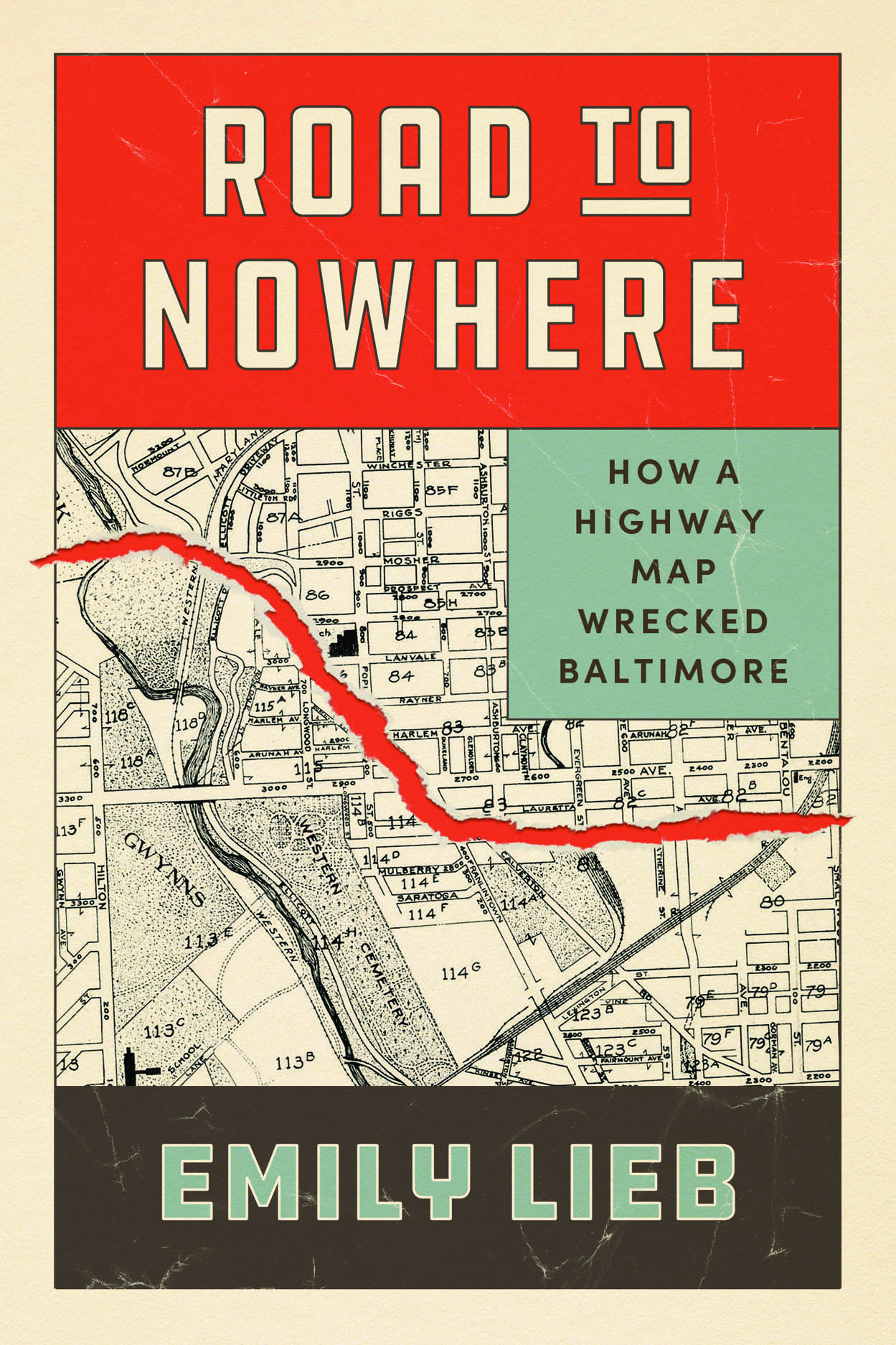
In her new book, Road to Nowhere: How a Highway Map Wrecked Baltimore, historian Emily Lieb describes the Baltimore suburb of Rosemont, which in the 1950s was a vibrant Black middle-class neighborhood of rowhouses and small businesses. By the end of the decade, Rosemont was effectively destroyed by plans for an expressway that was planned, but never completed. Lieb's detailed research and analysis clarifies the practices of blockbusting, redlining, and prejudicial lending, and highlights these patterns at work in a single neighborhood. Her absorbing story of the interwoven tragedies caused by urban renewal and transportation policy and their lasting effects on racial inequalities in housing, education, jobs, and health clearly describes both a local history and a national problem.
Emily Lieb
Emily Lieb is an historian of 20th-century American cities whose research focuses on processes of racial segregation and neighborhood change from the Progressive Era to the present day. She has a PhD in History from Columbia and an AB from Brown, and taught history and urban studies at Seattle University.
After an introduction by Director Carol Willis, Emily Lieb gives her presentation and then engages in conversation with urban historian Kenneth T. Jackson, Jacques Barzun Professor Emeritus of History and the Social Sciences at Columbia University.