
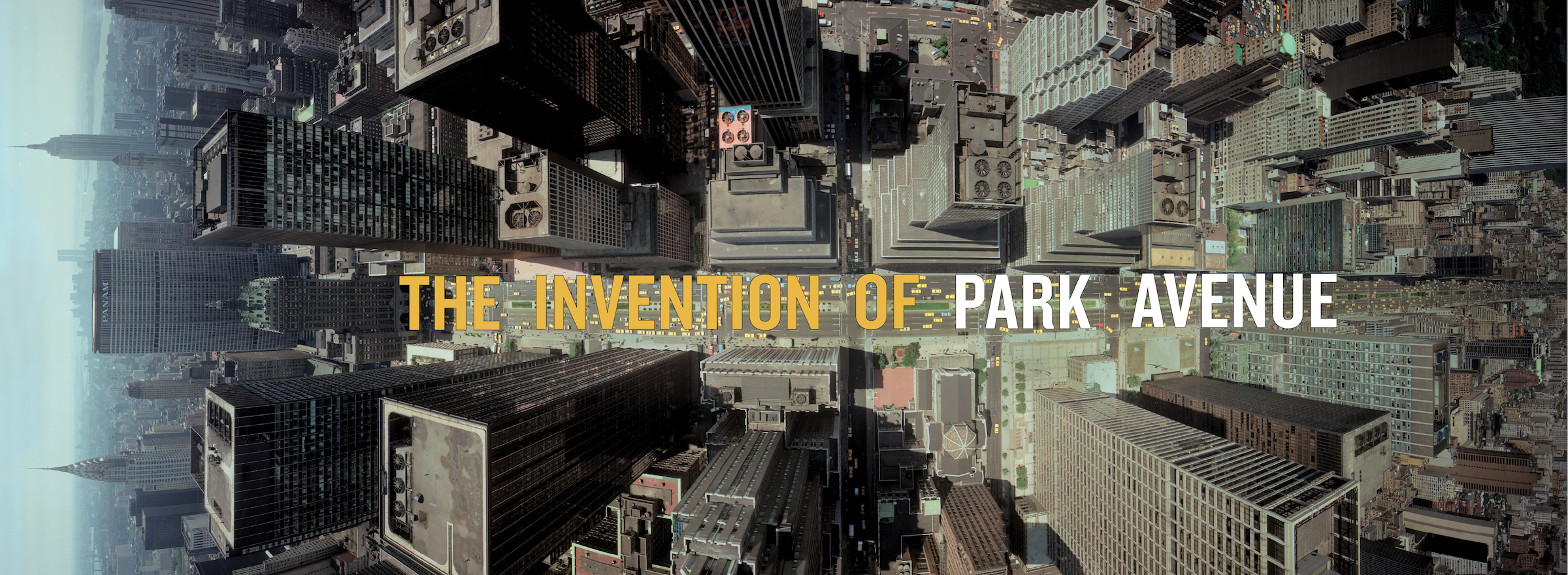
Aerial photograph from the Howard Sochurek photographic archive, camh-dob-040405, The Dolph Briscoe Center for American History, The University of Texas at Austin. c. 1965.
PARK AVENUE: Past, Present, Future
In the century-plus since Grand Central Terminal opened in 1913, after more than a decade of massive construction, the blocks from 42nd to 53rd Street were transformed from a noxious, impassable railyard into one of Manhattan’s most desirable and prestigious addresses: Park Avenue.
In conjunction with the Museum's current exhibition Th
speculative office towers answered growing demand for modern, air-conditioned space. Soon, the iconic Lever House, Seagram, and Union Carbide buildings recast Park Avenue as an elite corporate corridor. In the 21st century, incentivized by the City’s rezoning of East Midtown, shiny new skyscrapers of even greater height and density have continued to redefine its trophy architecture.
A range of historians, authors, architects, planners, and policy-makers will examine and discuss the evolving history and identity of the avenue that was created out of thin air and has become the engine and anchor of modern Midtown.
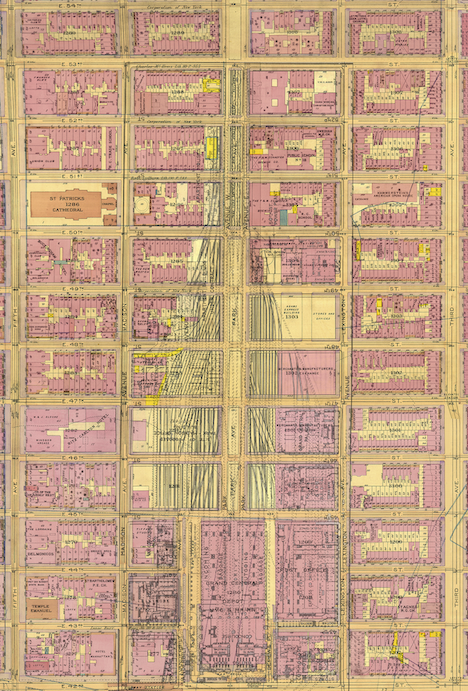
Carol Willis, museum director and curator of the exhibition The Invention of Park Avenue, will launch the series with an online lecture TRA(I)NSFORMATION. The talk will illustrate how the New York Central Railroad transformed its right of way into Manhattan via Fourth Avenue into a spectacularly successful infrastructure project that linked rail and real estate, not only as a revenue stream, but as what became an engine of urban development.
Previewing the arc of the series, Willis will illustrate how, in its first phase, Park Avenue was a zone of posh hotels, clubs, and apartments. The "highest and best use" began to shift toward tall office buildings in the mid-1920s. In the postwar years, a boom in speculative office towers answered growing demand for modern, air-conditioned space. Soon, the iconic Lever House, Seagram, and Union Carbide buildings recast Park Avenue as an elite corporate corridor. In the 21st century, incentivized by the City’s rezoning of East Midtown, new skyscrapers of even greater height and density have continued to redefine its trophy architecture and secure the future of the Midtown's prestige address.
The Architects of Terminal City
Tuesday, June 2, 2026 at 6pm
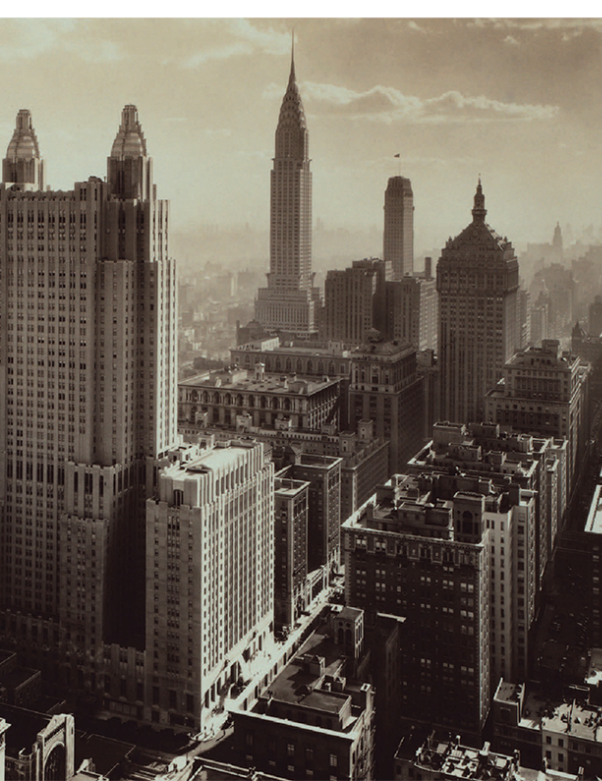
Architectural historians and authors Andrew S. Dolkart and Anne Walker will join forces in this program on the architectural firms Warren & Wetmore and Schultze & Weaver. To an astonishing degree, the designers of these two firms, closely related in practice and projects, dominated the commissions in the Grand Central district's – often called Terminal City – first phase of development from c.1906 to 1931. They designed the better part of all the buildings erected above the railyard from 42nd to 50th Street, largely hotels and swank apartments. Stately on the exterior and opulent within, the collective effect of their architecture was to create a high-rise lifestyle for High Society.
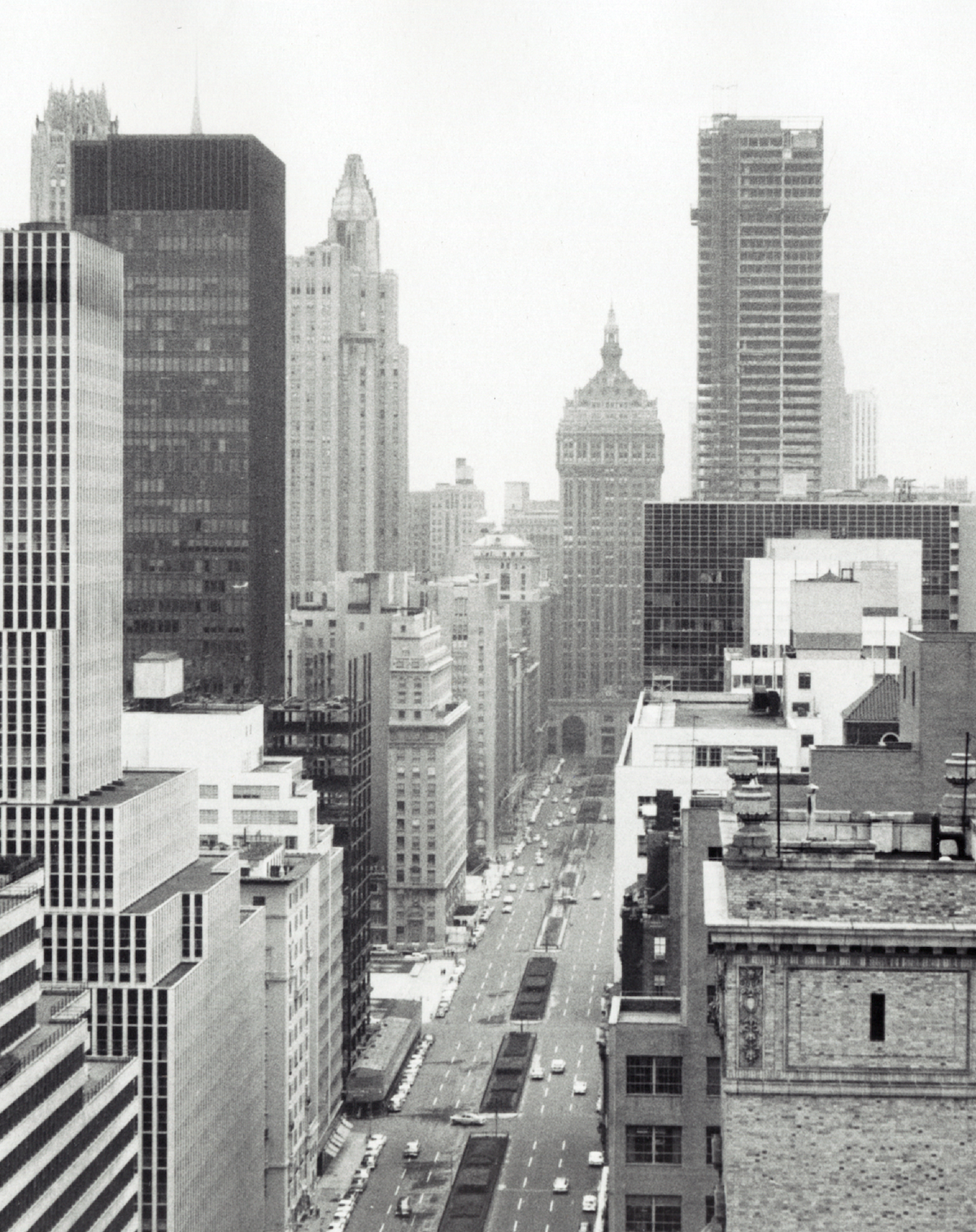
After a short history of the introduction of the International Style office buildings on Park Avenue after WWII by Carol Willis, Managing Partner of MdeAS Architects, Dan Shannon, will explain the major issues postwar glass boxes have faced and how their owners seek to update their aging curtain walls, lobbies, and mechanical systems to compete in the current market. Over the past 35 years, MdeAS has rejuvenated a large portfolio of postwar buildings on the Park Avenue corridor, including 90 Park Avenue for Vornado Realty Trust; 100 Park Avenue for SL Green; 200 Park Avenue for Tishman Speyer and Irvine Company; 237 Park Avenue for RXR; and 430 Park Avenue for Midwood Investment & Development. Shannon will discuss the economic influence on the tower as a typology, as well as how some emerging modernists held to traditional elements while others became fully modern.
Assessing East Midtown Rezoning
Tuesday, July 7, 2026 at 6pm
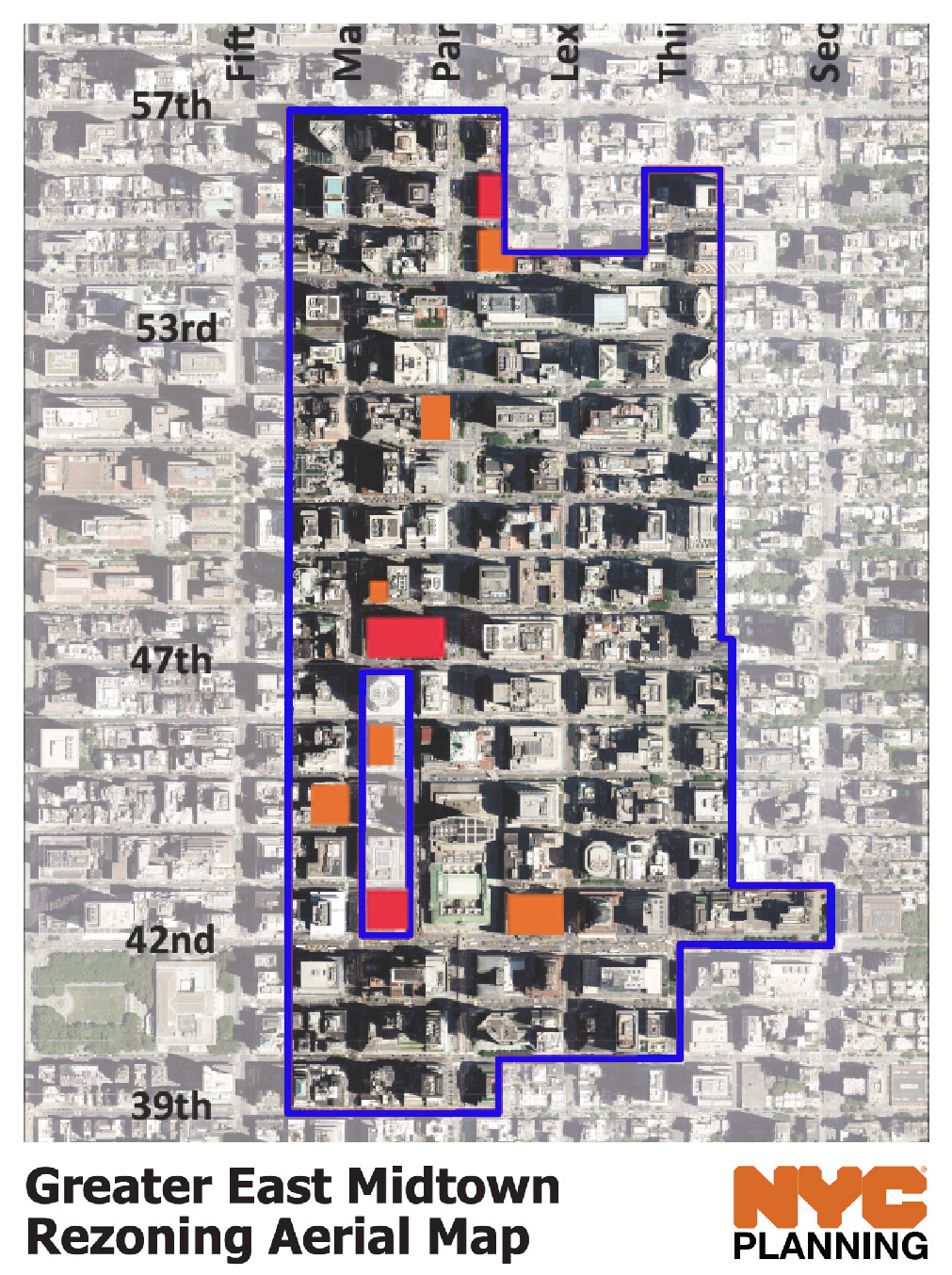
The goal of rezoning East Midtown – the 78-block district that stretches from East 39th to East 57th Street, from Third to Madison Avenues – was, in the words of the New York Times when it was passed in 2017, “to revitalize what was once the core of corporate activity in New York City.” Now, nine years later, we’ll revisit that history and assess the impact of East Midtown Rezoning.
First proposed by the Bloomberg administration in 2012 and ultimately adopted by the City Planning Commission and the City Council in August 2017, East Midtown Rezoning was a public policy measure designed to tip the shifting scales back from the government-subsidized competition of the new, Class A towers of Hudson Yards and Ground Zero toward the transit-rich, but aging office district anchored by Grand Central and Park Avenue – the original Terminal City.
The program brings together a panel of experts who helped frame the draft and details of the East Midtown Special District, as well as those who have designed buildings within its borders, to explain the challenges of its original intentions and to evaluate the outcomes to date. The panelists include:
21st Century Towers — Foster + Partners
Tuesday, July 21, 2026 at 6pm
New Yorkers today are eyewitnesses to the third phase of Park Avenue's evolution as a value corridor and luxury brand. The New York Central's original Terminal City "air rights" zone above the railyard forms the heart of the East Midtown Rezoning District that has incentivized a new scale of construction.
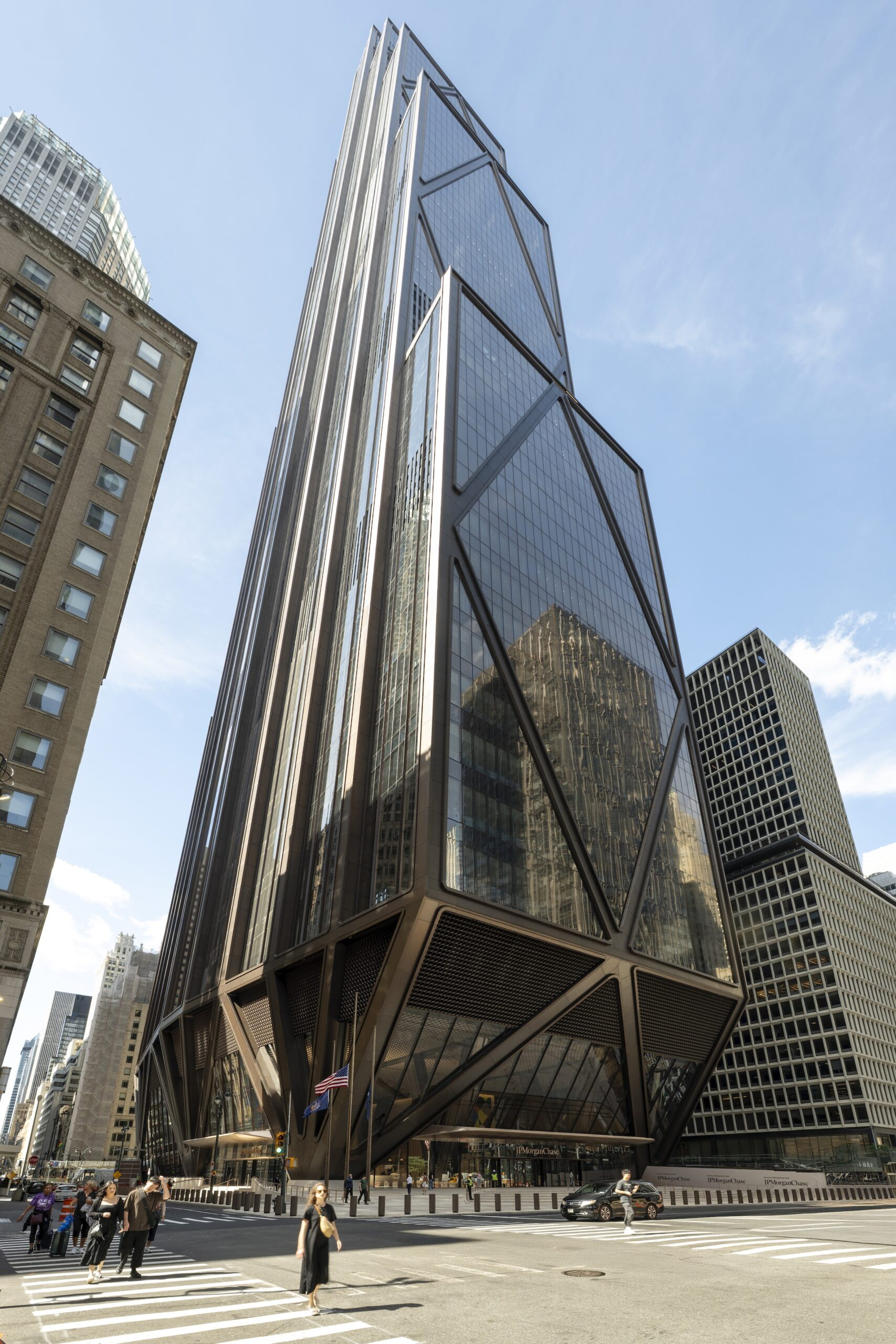
One architectural firm – Foster + Partners – has dominated this new scale on the avenue and skyline. 425 Park Avenue for L&L Holding Company, proposed in 2012 and completed in 2021, was the first new full-block building in the district in more than fifty years and preceded the East Midtown Rezoning. Last fall, the firm completed the mammoth new global headquarters of JPMorgan Chase at 270 Park, on the site of the 1960 Union Carbide Building and before that, the 1917 Margery Apartments. Tallest of Foster + Partners's three Park Avenue projects is the design for a new building for Citadel at 350 Park.
Key designers from the New York office of Foster + Partners will discuss their work in the district, including the revamps of the adjacent towers on the JPMorgan Chase campus.
Public Space on Park Avenue
Tuesday, July 28, 2026 at 6pm
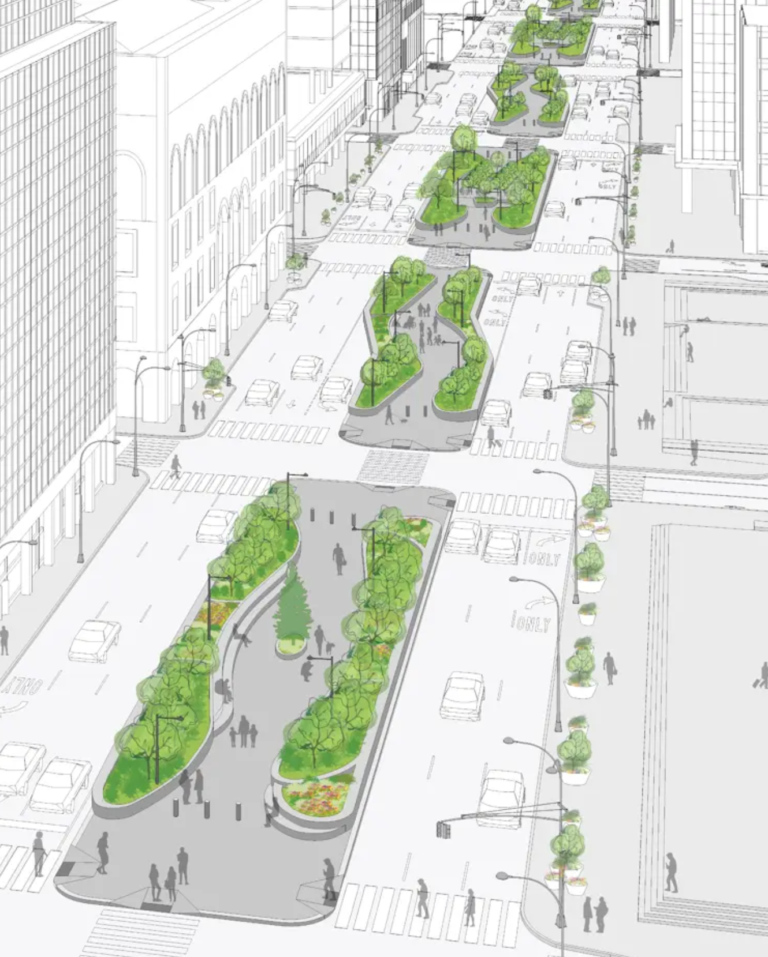
The nominal “park” of the Park Avenue median from 46th Street to 57th Street has stretched and shrunk over the past century. Created out of thin air from 1903 to 1913 during the electrification and double decking of the New York Central’s railyard, underground, Park Avenue is both a bridge and a tunnel. Above “ground,” it is one of the world’s greatest urban boulevards.
Now, the century-old infrastructure of road and bridge is the focus of a lengthy rehabilitation effort by the NYC Department of Transportation (DOT) and the Metropolitan Transportation Authority’s (MTA) Metro-North Railroad, which is responsible for the maintenance and reconstruction of the Grand Central Terminal Train Shed. Over the coming years, as the roof is repaired in phases, Park Avenue’s medians will be widened and the public space redesigned. Working with the landscape architects of Starr Whitehouse, NYC DOT is engaged in the final stages of “putting the ‘park’ back in Park Avenue."
This final program in the Museum’s series Park Avenue: Past, Present, Future will bring together key members of the Park Avenue team to discuss their process and plans. Panelists to be announced.
Speaker Bios
Vicki Been is the Judge Edward Weinfeld Professor of Law at NYU School of Law and Co-Director, Furman Center for Real Estate and Urban Policy. Been served as Deputy Mayor for Housing and Economic Development of the City of New York from May, 2019 to December 2021 and from 2014 to 2017 was Commissioner of Housing Preservation and Development. She is an expert on the intersection of land use, urban policy and housing.
Andrew S. Dolkart is an architectural historian, preservationist, and Professor at Columbia University’s Graduate School of Architecture, Planning and Preservation, where he was Director of the Historic Preservation Program from 2008-2016. He is the author of numerous books on the architecture and urban development of New York City, focusing in particular on the city’s everyday, vernacular building types. These include the award-winning volumes Morningside Heights: A History of Its Architecture and Development; Biography of a Tenement House in New York City: An Architectural History of 97 Orchard Street; and The Row House Reborn: Architecture and Neighborhoods in New York City 1908-1929. He wrote about the architecture of Schultze & Weaver in "Millionaires' Elysiums: The Luxury Apartment Hotels of Schultze and Weaver," for "The American Hotel" issue of The Journal of Decorative and Propaganda Arts in the 2005 issue (Vol. 25).
Dan Garodnick served as a Member of the New York City Council for Manhattan's 4th District from 2006 through 2017. He played a key role in negotiating complicated land use matters, including the rezoning of East Midtown and the Vanderbilt Corridor. From February 2022 to March 2026, Garodnick served as Director of the Department of City Planning and Chair of the City Planning Commission.
Purnima Kapur has been the Chief of University Planning and Design at Harvard University since 2021. From July 2014 through 2018, she served as the Executive Director of the City Planning Department, culminating more than two decades experience across the agency. Working closely with the Chairman and Deputy Mayor for Housing and Economic Development, Kapur was one of the architects of the City’s Mandatory Inclusionary Housing regulation, as well as an innovative plan for the redevelopment of Greater East Midtown.
Jonathan Mechanic is Chairman of the law firm Fried Frank’s Real Estate Department where he has been a partner for nearly four decades. Jon counsels developers, owners, investors, tenants, REITs, and lenders in all aspects of commercial real estate transactions. His direct experience in the East Midtown Rezoning District includes representing JP Morgan in the redevelopment of their headquarters at 270 Park Avenue and Citadel on the development of Citadel's new headquarters at 350 Park Avenue and 40 East 52nd Street. Jon has taught a real estate transactions course at Harvard Law School for more than ten years and is currently teaching a similar course at Columbia Law School. He is a member of the Board of Trustees of NYU Law School and chairman of NYU’s Furman Center for Real Estate and Public Policy.
Dan Shannon is the Managing Partner at MdeAS Architects in New York City and is a recognized leader in commercial design. With four decades of experience, he has honed his expertise through in the construction of over 100 million square feet of urban fabric. Notable projects include the restoration of the iconic GM Building and the incorporation of the Apple Cube into its plaza, which earned a MASterworks Award for Best Privately-Owned Public Space; the redevelopment of numerous prominent buildings along Bryant Park, Madison Avenue, and Park Avenue; and, most recently, PENN 1 & PENN 2 of THE PENN DISTRICT. Dan’s affinity for the philosophy of modernism informs his design approach and his commitment to urbanistic values inform all his projects.
James von Klemperer is President and Design Principal at Kohn Pedersen Fox Associates, where he is responsible for leading the staff of over 750 architects across nine offices around the world. A major skyscraper architect, von Klemperer has designed multiple global supertalls. In Midtown Manhattan, he is the lead designer of One Vanderbilt Tower, 520 Fifth Avenue, and the planned 343 Madison Avenue..
Anne Walker is a co-author with Peter Pennoyer on a series of stunning monographs on American architectural firms of the early twentieth century, including The Architecture of Delano & Aldrich (2003), The Architecture of Warren & Wetmore (2006), The Architecture of Grosvenor Atterbury (2009), New York Transformed: The Architecture of Cross & Cross (2014) and Harrie T. Lindeberg and the American Country House (2017). Anne is a graduate of the Chapin School and Middlebury College. She received her MS degree in History Preservation and Conservation from Columbia University's Graduate School of Architecture, Planning and Preservation.
Carol Willis is the founder, director, and curator of The Skyscraper Museum. She is the author of Form Follows Finance: Skyscrapers and Skylines in New York and Chicago (Princeton Architectural Press, 1995), among other publications. An architectural and urban historian, she has taught as an adjunct professor at Columbia University for more than thirty years.
HOW TO REGISTER
Members receive priority for reserved spots and can register for the entire series or individual programs by emailing [email protected].
If you are not a member of The Skyscraper Museum, you must register for each program separately by clicking the RSVP button on the individual lecture's page, which forwards you to Ticketstripe. You will receive the Zoom link upon reserving your FREE ticket on Ticketstripe.
Want to become a member? Click here!