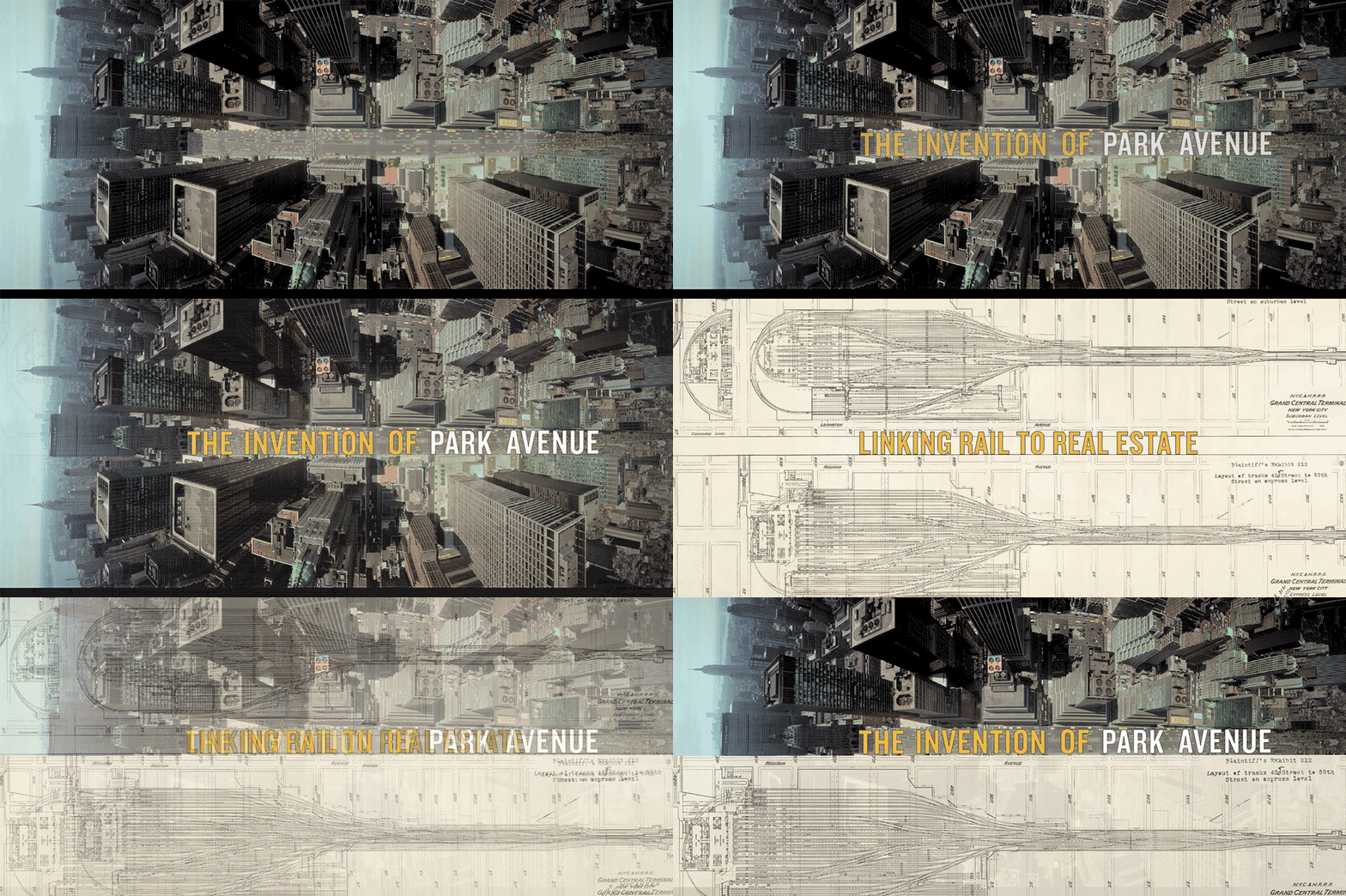
TERMINAL CITY
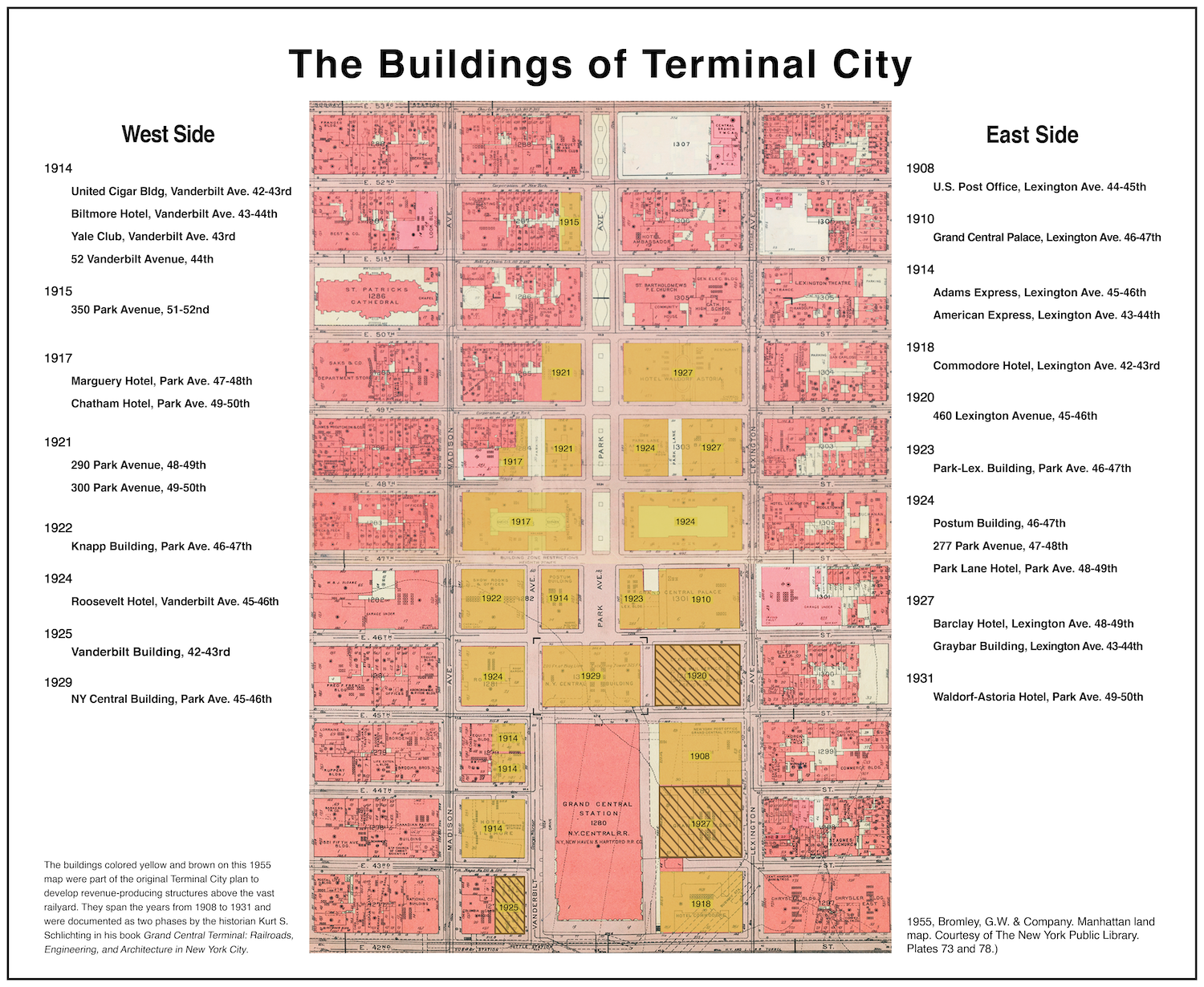
1955, Bromley, G.W. & Company. Manhattan land map. Courtesy of The New York Public Library. Plates 73 and 78.) For an interactive map of the year-by-year additions to the Terminal City district, click here.
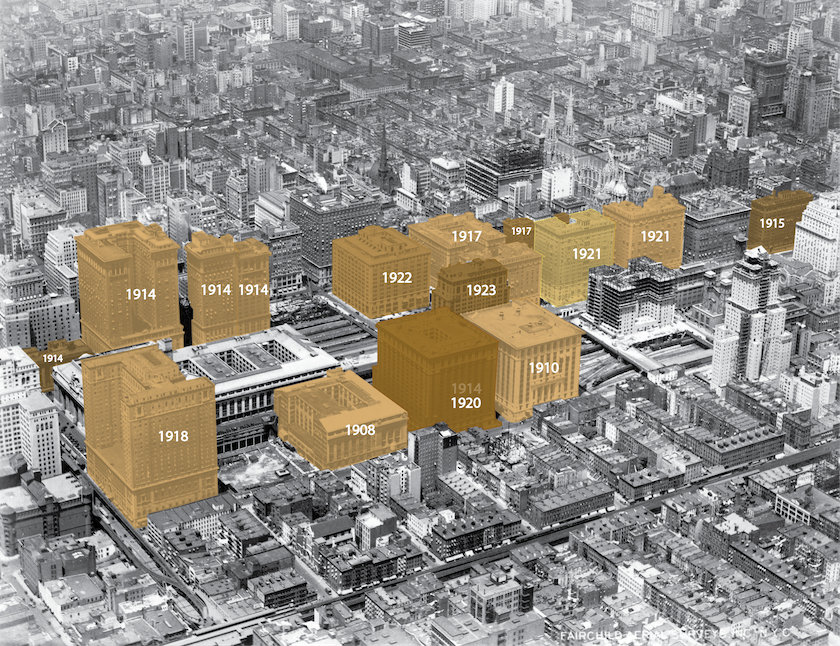
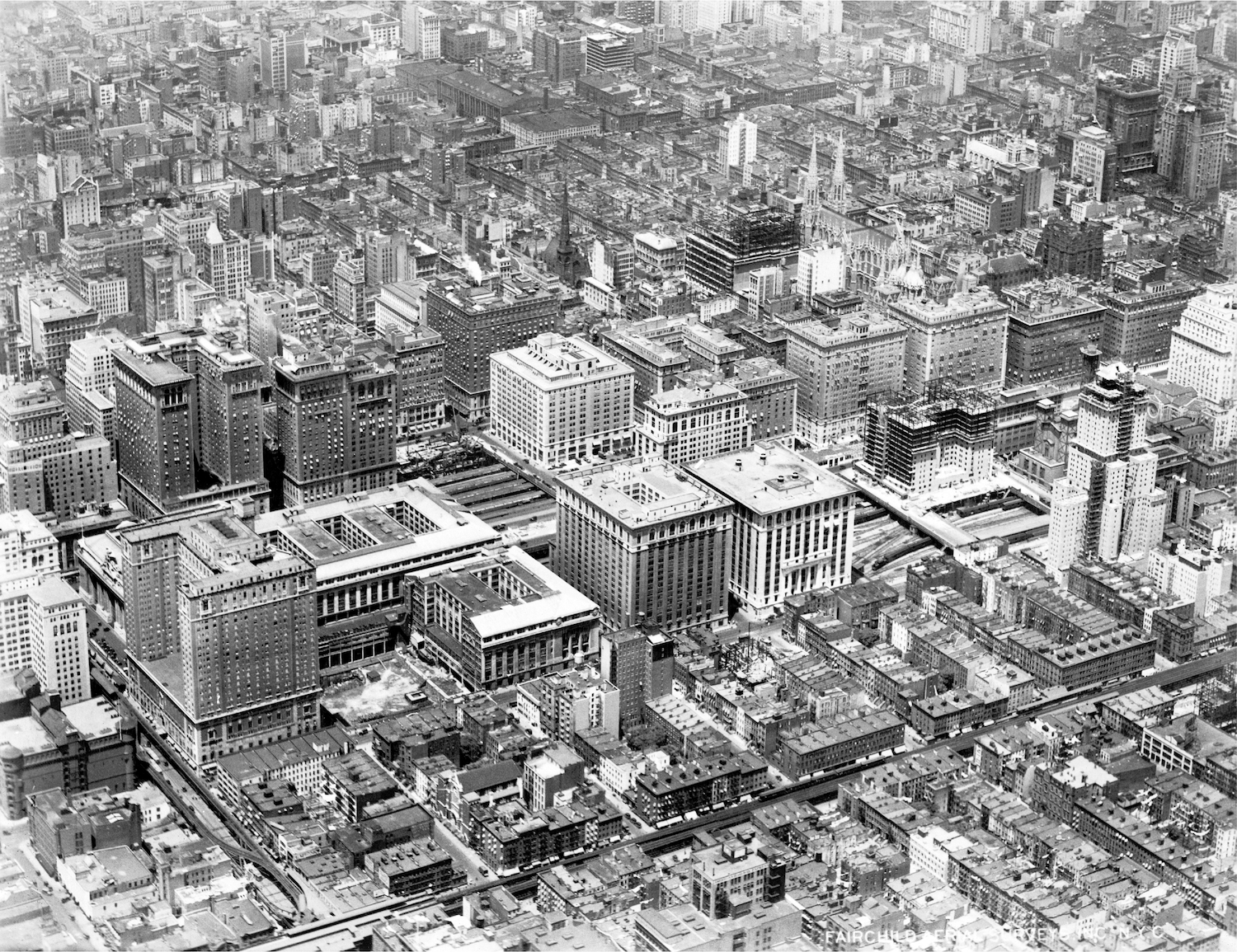
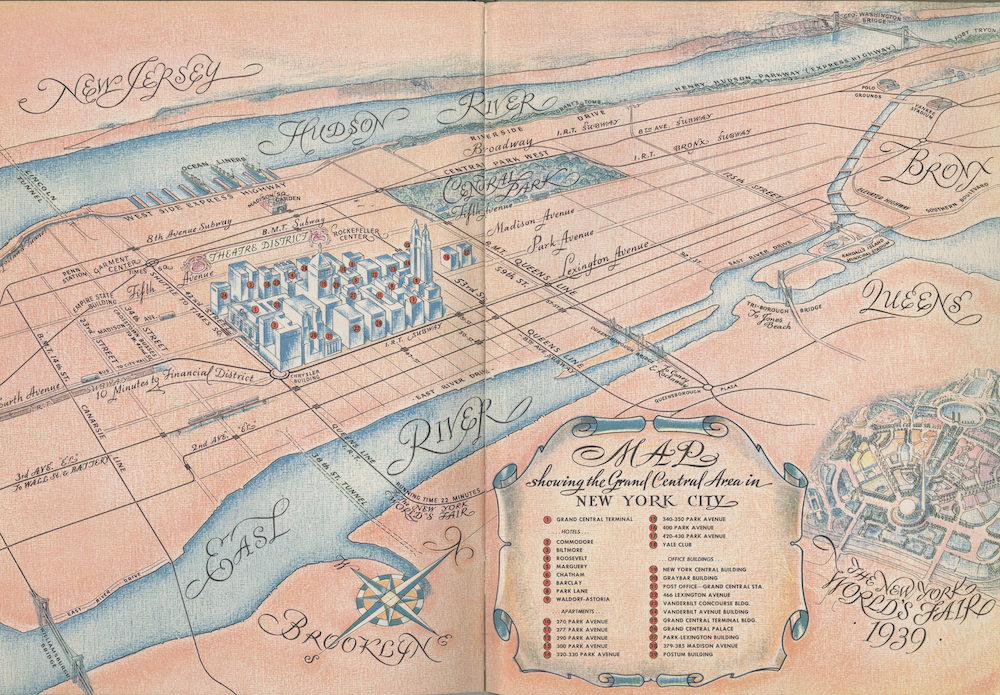
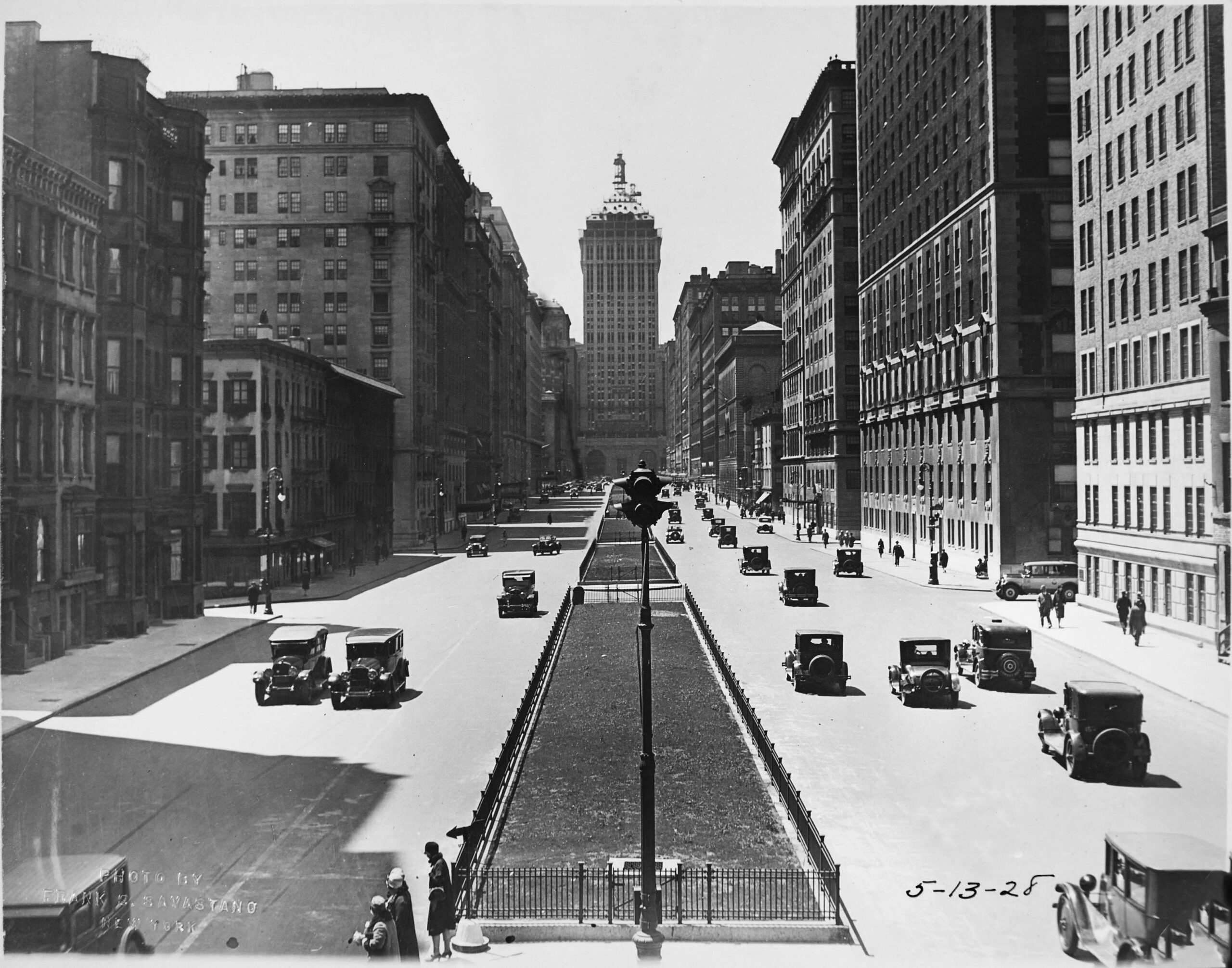
For an aerial photo animation of the year-by-year additions to the Terminal City district, click here.
CREATING A NEW CITY DISTRICT
The New York Central conceived a “Terminal City” of hotels, apartments, and office buildings on “land” leased by the railroad. In the first ten years after the completion of Grand Central, the Railroad either developed directly or partnered with others to fill in the majority of the empty “air rights” blocks over the double-decked tracks. On Park Avenue, most of the sites were developed with 12- to 14-story hotels and apartment blocks of stately design. By the end of the Twenties, though, true skyscrapers, such as the Waldorf Astoria and New York Central Building, enlarged the scale and reasserted New York’s dominant trait, verticality. By 1931, the plan had succeeded: all the empty blocks were filled, and Park Avenue – fashioned out of thin air – had become Manhattan’s prime address.
The map, aerial photograph, and associate slide shows (accessed on the left) chronicle the year-by-year additions to the Terminal City district. The buildings colored yellow and brown on the 1955 map were part of the original Terminal City plan to develop revenue-producing structures above the vast railyard. They span the years from 1908 to 1931 and were documented as two phases by the historian Kurt S. Schlichting in his book Grand Central Terminal: Railroads, Engineering, and Architecture in New York City. The Museum also denotes the building in yellow and brown on an aerial photograph by Sherman Fairchild, which illustrated in 3D how Park Avenue was built up through 1923.
Slideshow Image Credits:
1: Chronology of Terminal City Buildings, The Skyscraper Museum, overlaid on a Fairchild Aerial Survey, 1923. Photograph by Sherman Fairchild, New York State Archives.
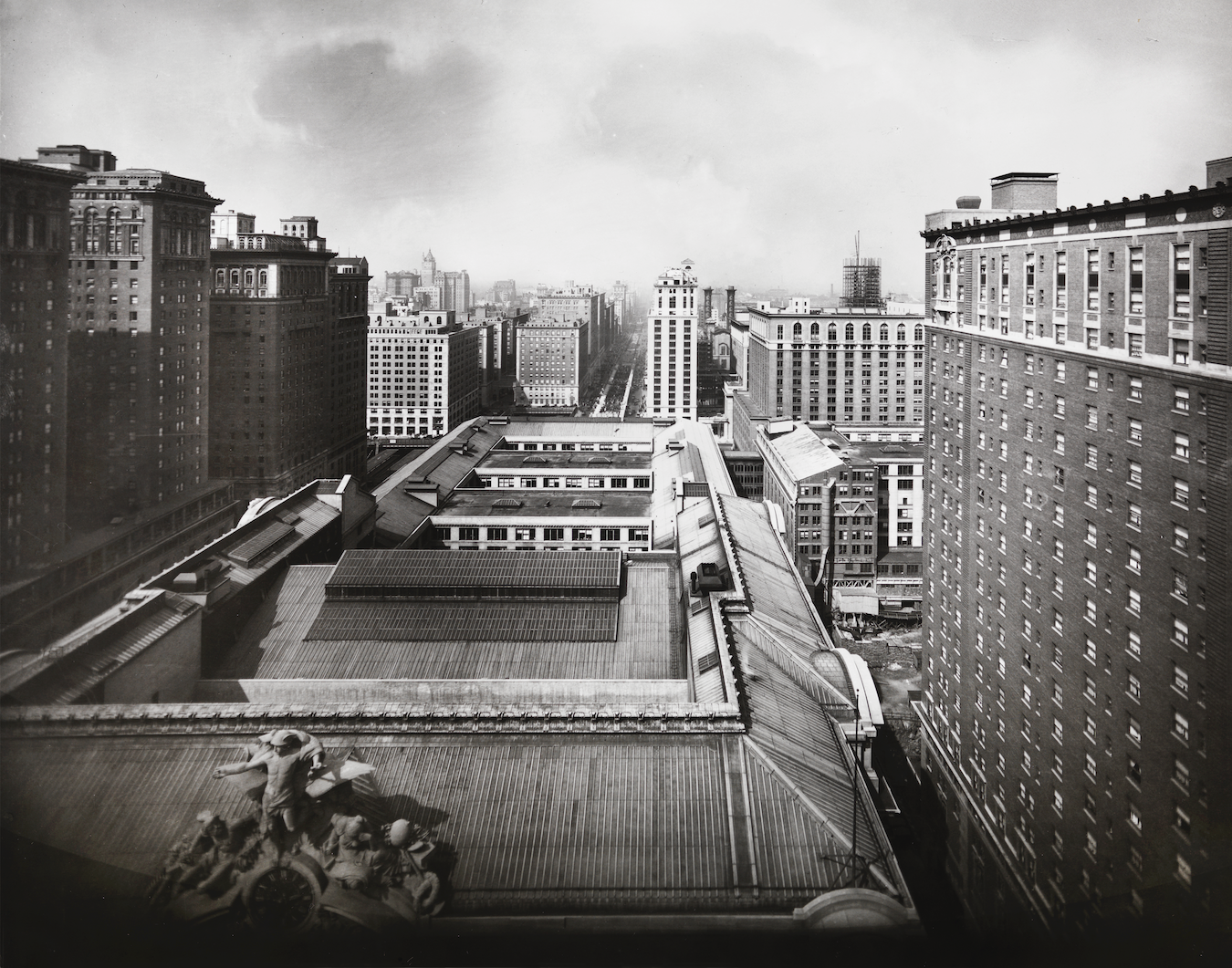
2: View of Grand Central Terminal, Looking North Up Park Avenue From 42nd St., c. 1920, photograph by Arthur Vitols, Byron Company, Museum of the City of New York.
3: View of the Grand Central Terminal and the surrounding area, Fairchild Aerial Survey, 1923. Courtesy of the New York State Archives.
4: Aerial drawing of Terminal City and New York from The Gateway to a Continent promotional book, 1939. Collection of The Skyscraper Museum.
5: Park Avenue, looking south from 57th Street, 1928, Manhattan Borough President photograph collection, courtesy of the Municipal Archives, City of New York.
HOTELS
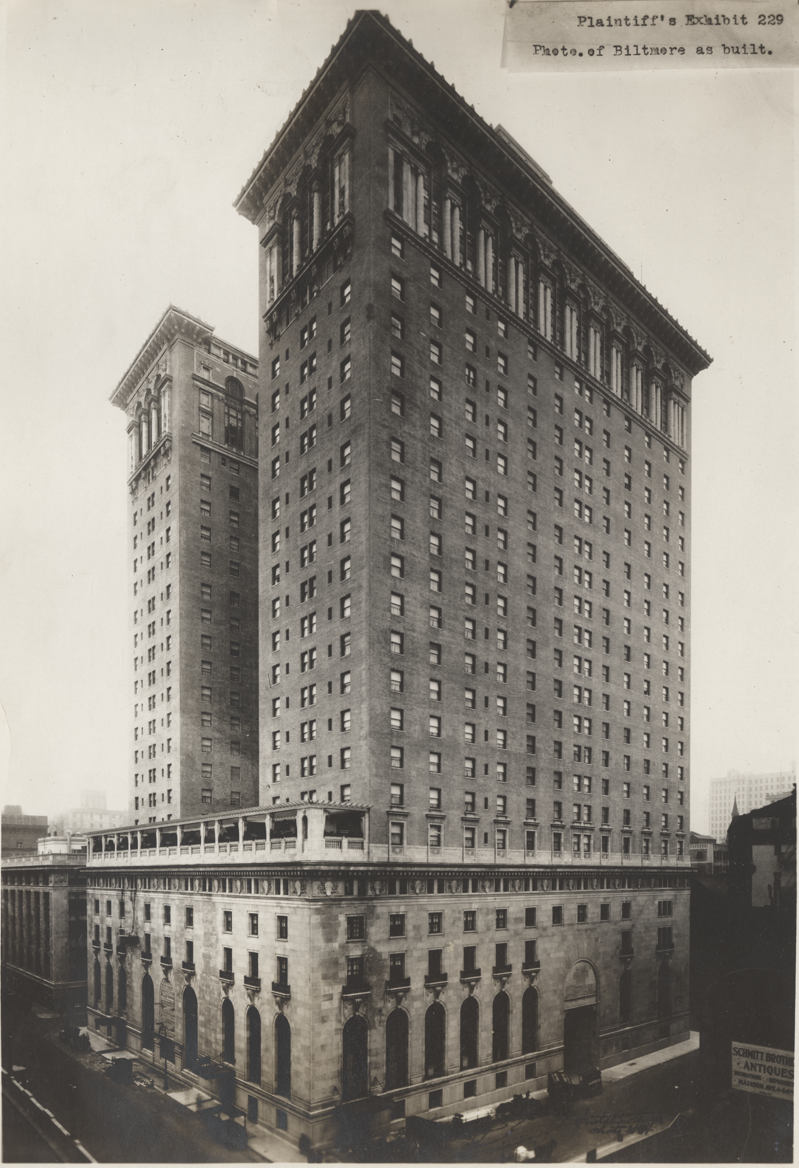
Hotels and apartment hotels – both for travelers and long-term residents – represented the first wave of development of Terminal City. It was a long-established practice for railroads to erect hotels adjacent to their stations as revenue-producing investments. The New York Central planned the huge Biltmore as an integral part of the station complex. Completed in 1914, the Biltmore rose above the tracks and had direct underground access from the long-distance train platforms.
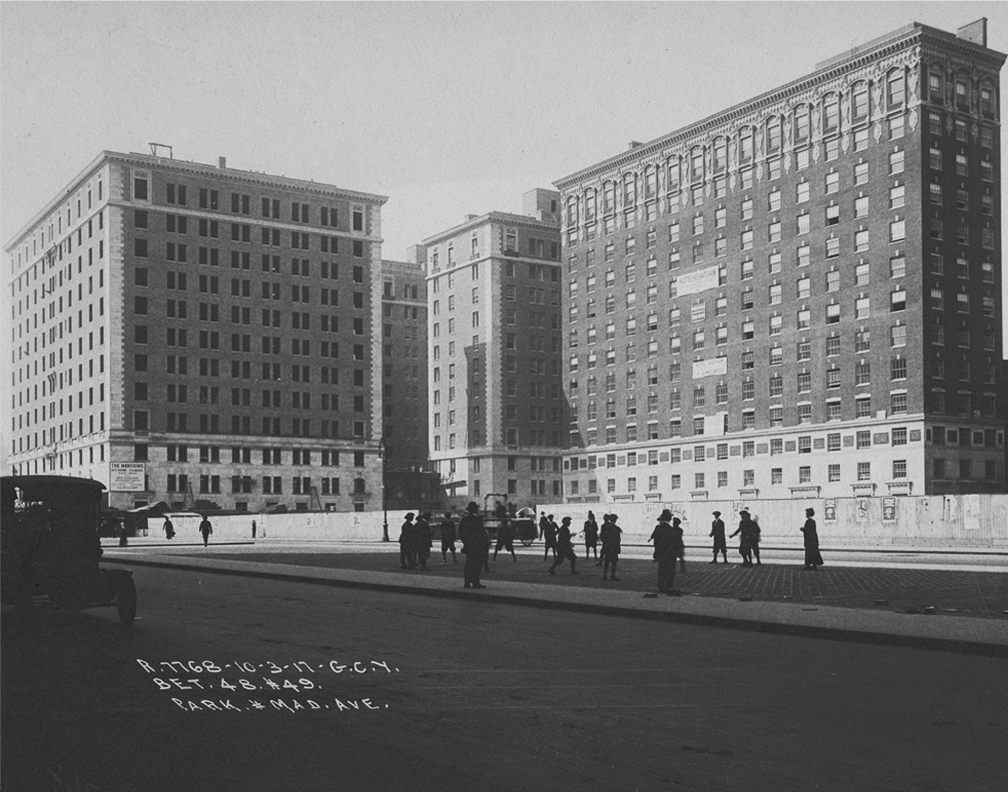
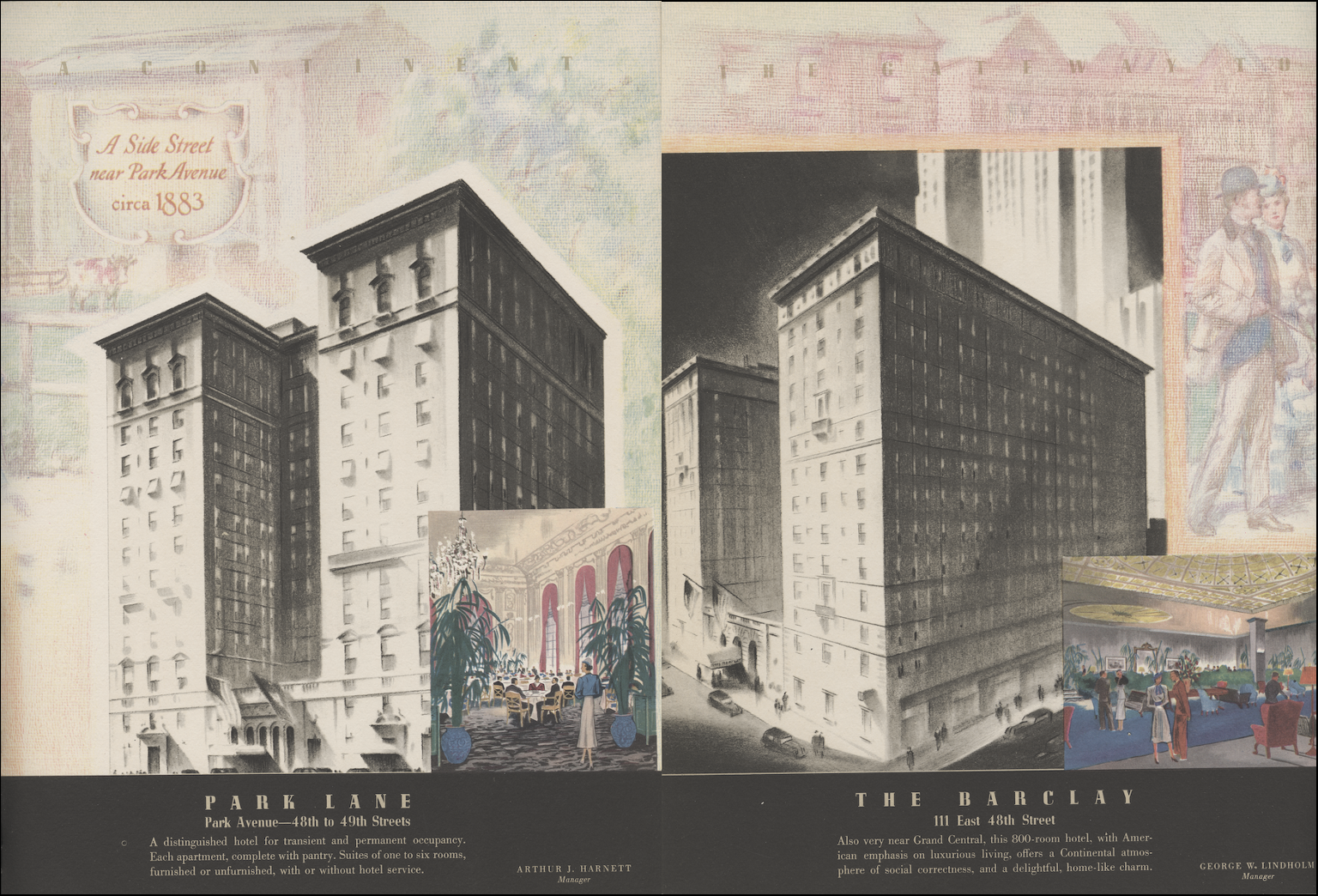
The Central also leased the air rights above the empty blocks on Park Avenue north of 46th Street to developers who designed their own projects. The majority of the new buildings erected from 1917 to 1924 were hotels or apartment hotels. While many of these buildings had luxurious apartments of ten or more rooms, they were classified by the City as hotels because they had no private kitchens. Examples pictured here include the Marguery and Chatham (photo at back) and the Barclay and Park Lane (book).
Stylistically, the buildings of the Terminal City inner zone are very similar – partly because they had the same function and floor plans, and especially because the majority were designed by Warren and Wetmore, the architects of Grand Central. All had abundant in-house services and amenities, including fine restaurants and elegant ballrooms, which was one of the attractions to those who valued a Park Avenue address.
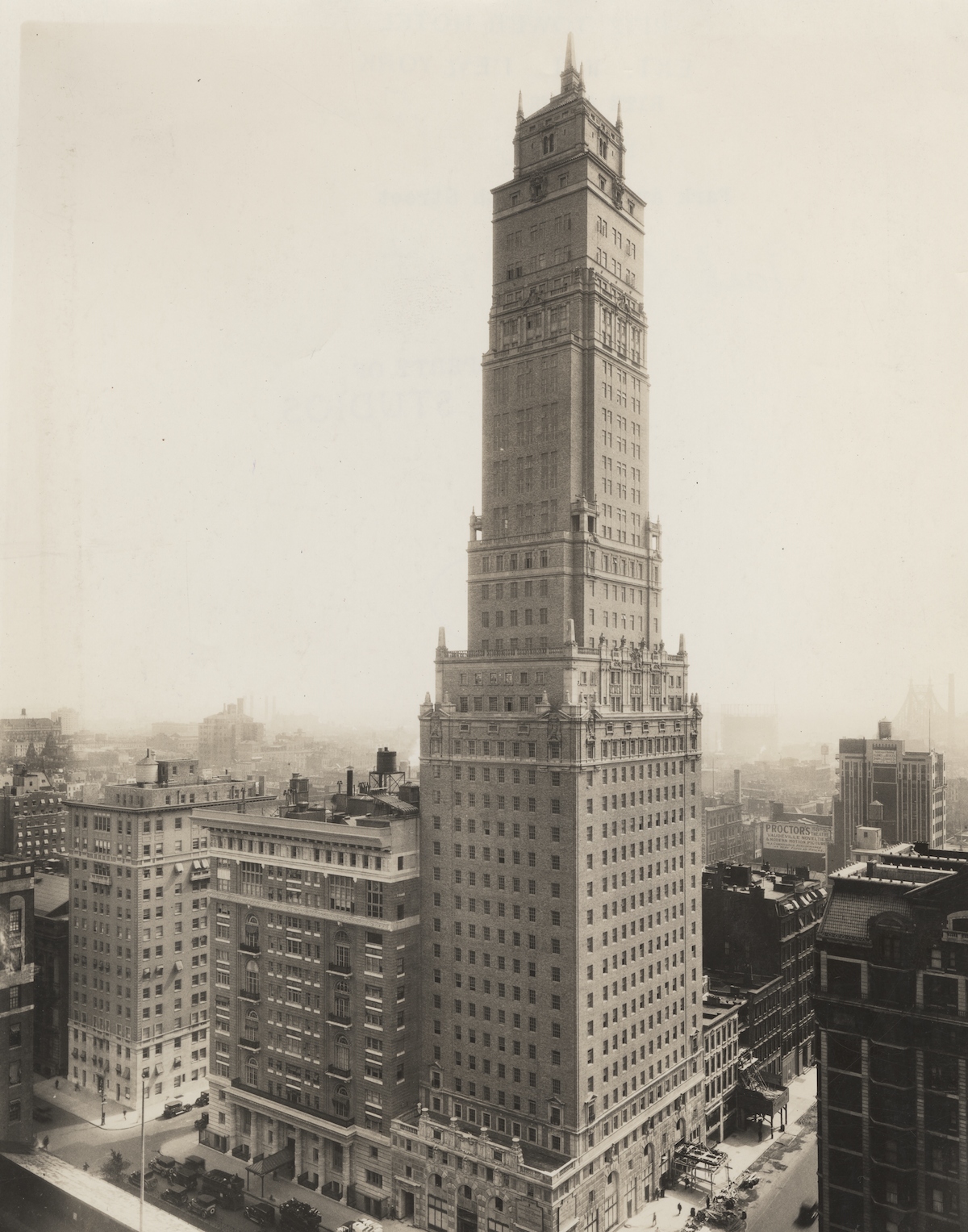
The first building to break the mold of the standard palazzo-like cube on Park Avenue was the Ritz Tower at the northeast corner of 57th Street. Completed in 1926, the 41-story skyscraper was an apartment hotel developed by the celebrity journalist Arthur Brisbane. Designed by Emery Roth and Thomas Hastings, at 541 feet (165 m), the Ritz Tower became the tallest residential building in New York City, until surpassed in 1927 by the Sherry Netherland. Roth’s elevation drawing is reproduced on the back of the case.
Slideshow Image Credits:
1: Marguery Apartments & Chatham Hotel,, Between 48th & 49th St., Park & Madison Ave., October 3, 1917. Collection of the National Museum of American History
2: The Gateway to a Continent, Promotional Book of the New York Central, 1939. Collection of The Skyscraper Museum
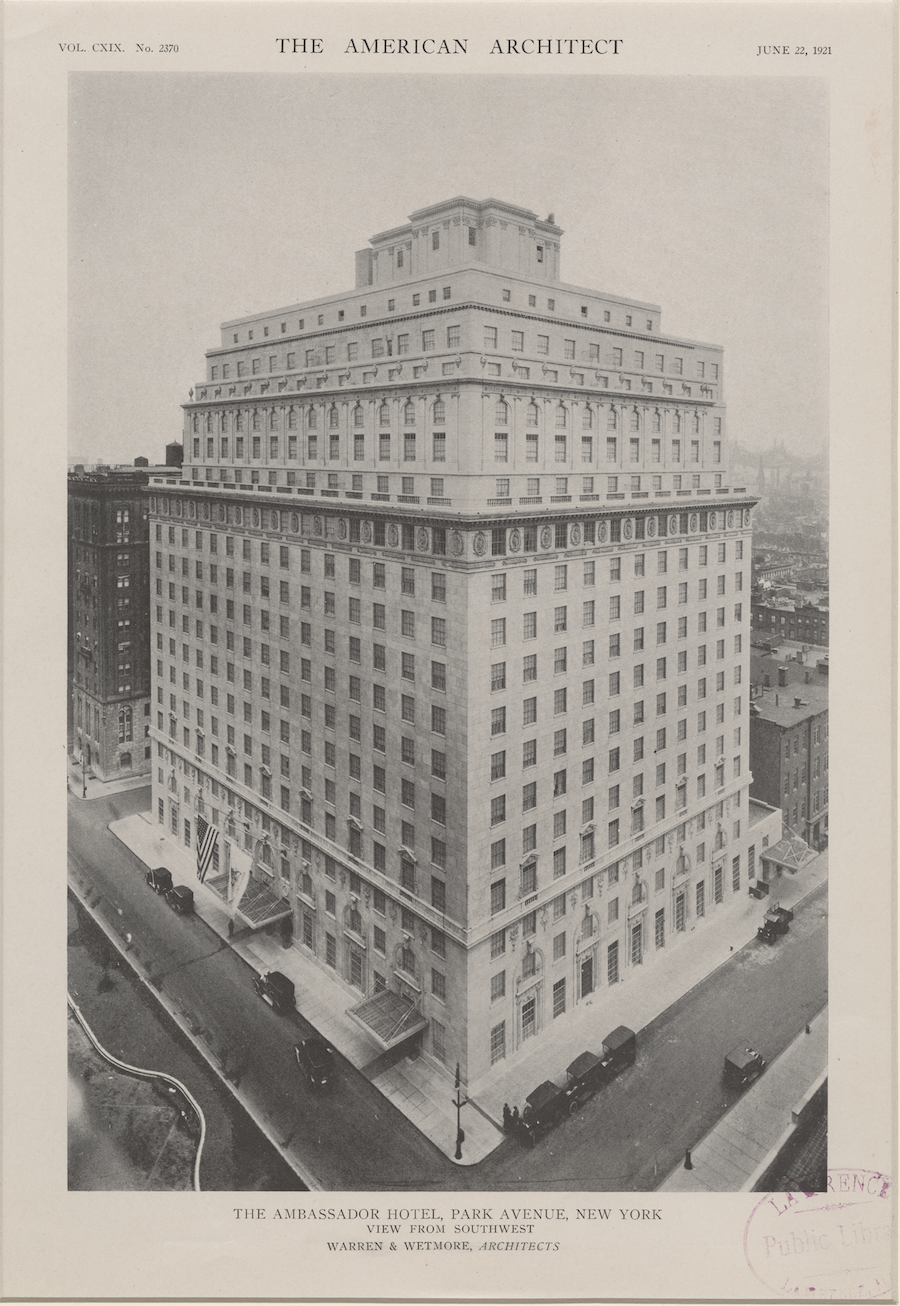
3: Ambassador Hotel, Park Avenue, View from Southwest, Warren & Wetmore, Architects, The American Architect, [Vol. CXIX, No. 2370] June 22, 1921. Collection of The Skyscraper Museum
4: Ritz Tower Hotel, Park Ave. & 57th St., Press Photograph by Brown Brothers. Collection of The Skyscraper Museum
5: Reproduction of Ritz Tower, 1925, Emery Roth Architectural Drawings and Autobiography, 1907-1949, Roll A034.13, Avery Architectural & Fine Arts Library, Columbia University.
1955, Bromley, G.W. & Company. Manhattan land map. Courtesy of The New York Public Library. Plates 73 and 78.) For an interactive map and aerial photo animation of the year-by-year additions to the Terminal City district, click here.
New York Central Building. Courtesy of the New York Public Library.
A NEW SCALE: SKYSCRAPERS
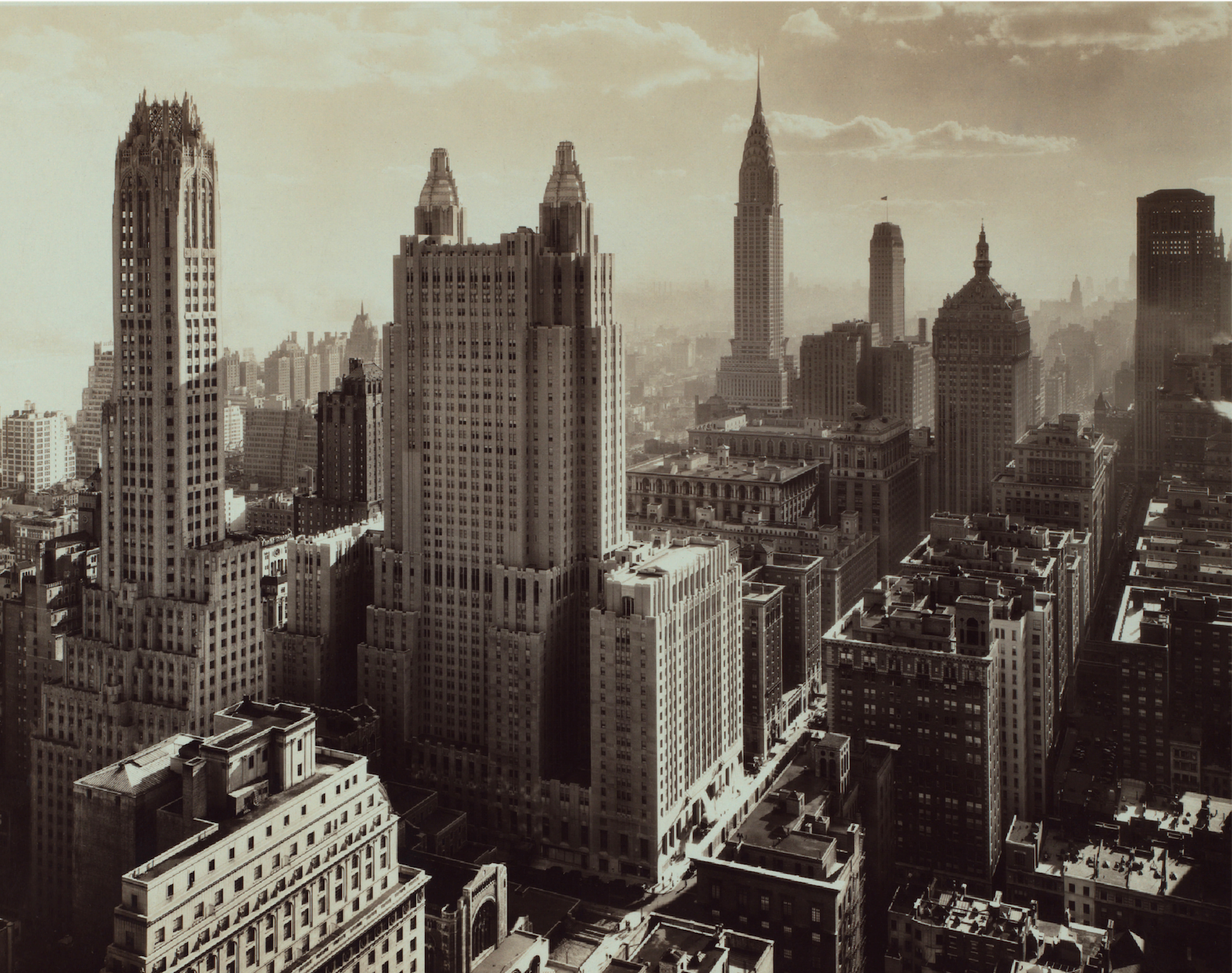
This spectacular, romantic, aerial photograph of 1932 by the Wurts Brothers captures the Park Avenue skyline at the culmination of the late-Twenties boom in development that brought a new scale of design and construction to Midtown: skyscrapers. Park Avenue cuts diagonally from the lower center to the upper right, where the tower of the New York Central (now Helmsley) Building formalizes the terminal’s connection to the new district of Park Avenue it created to its north. As both New York and America slid further into the Great Depression, 1932 also marked the end of the ebullient era of speculative construction, as well as the spending sprees that supported the high-society lifestyles of residential Park Avenue.
In the foreground, the newly-completed Waldorf Astoria looms more than twice the height of the five blocks of Terminal City to the south with their coherent cornice lines. (On their west facades, notable in this view, is the clear cut of Vanderbilt Avenue, which runs from 42nd to 49th Street.) The Waldorf rises like a mountain above its full-block site that stretches from Park to Lexington Avenue and steps back to a wide shaft, crowned by two small ornamental cupolas that give the skyscraper its Art Deco silhouette. The other spires in this atmospheric view, looking south to Grand Central are, like the Waldorf, brand new to the skyline.
The new style of setback skyscrapers of the late 1920s boom expressed the late Twenties’ exuberant real estate speculation. The shapes of the towers followed the new rules of the 1916 zoning law that required regular setbacks in the building’s massing, but permitted a tower to rise to unlimited height over a quarter of the area of the site. The RKO/ General Electric Building in the left foreground and the distinctive profile of the Chrysler Building in the center background are examples of the characteristic formula.
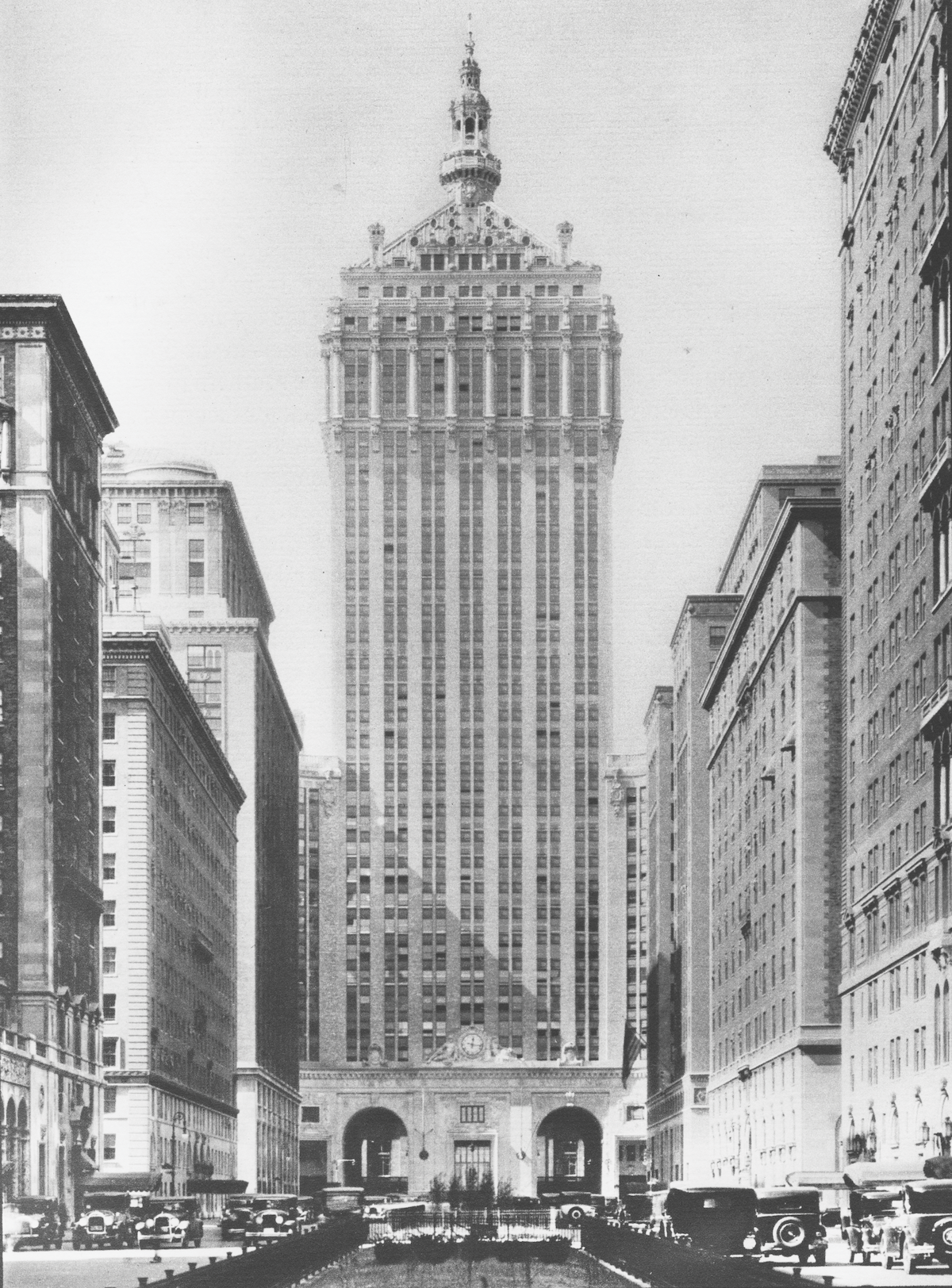
Even Warren & Wetmore developed a tower form for the New York Central Building, completed in 1929, as the New York Central’s new office headquarters, as well as a revenue-producing rental property. With this capacious skyscraper, with its pride of place as the culmination of the southern view to Grand Central, the architects of Terminal City translated their horizontal civic sensibility into New York verticals.
WALDORF ASTORIA
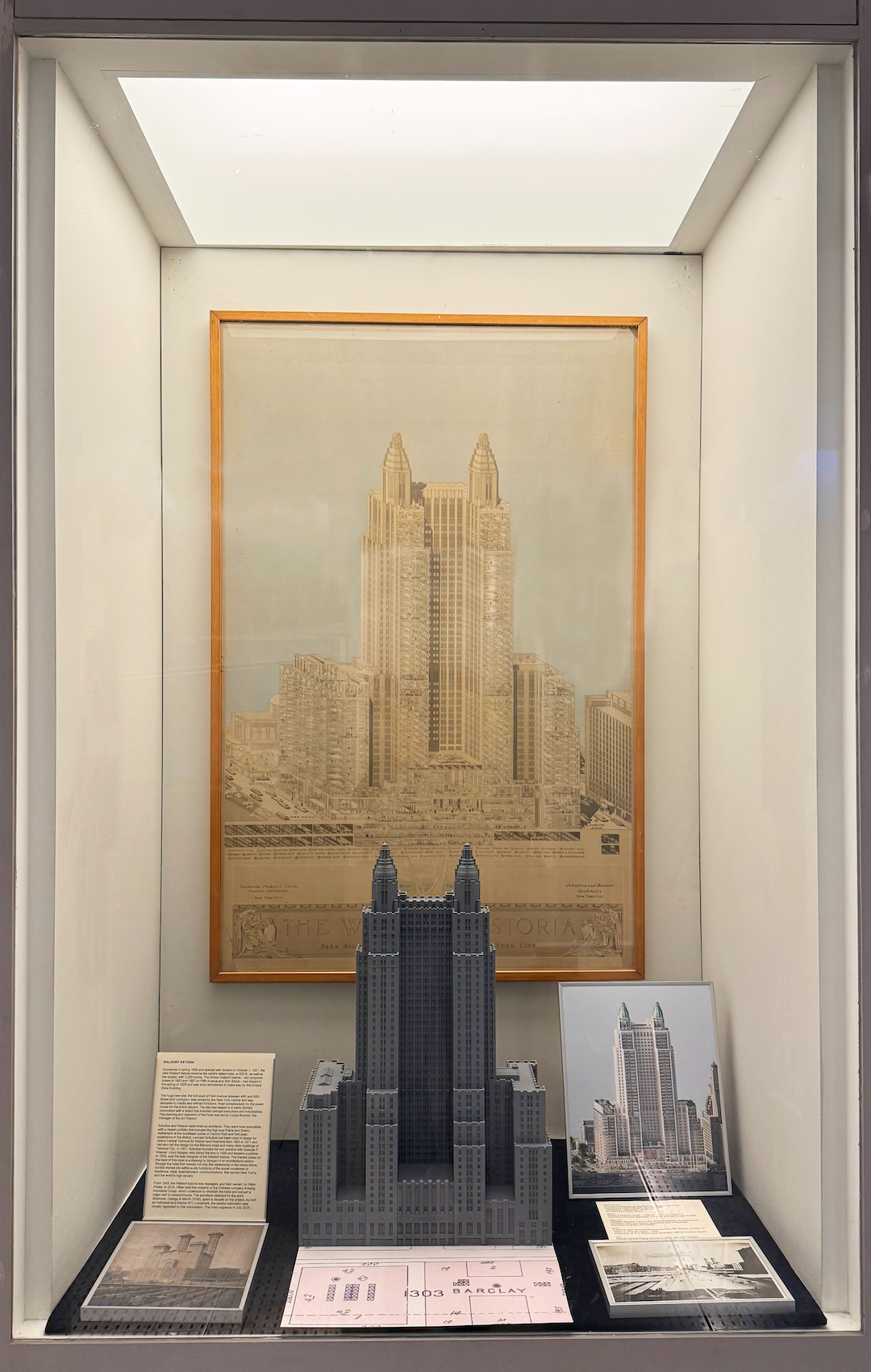
Conceived in spring 1929 and opened with fanfare on October 1, 1931, the new Waldorf Astoria became the world's tallest hotel, at 625 ft., as well as the largest, with 2,200 rooms. The former Waldorf Astoria – two conjoined hotels of 1893 and 1897 on Fifth Avenue and 34th Street – had closed in the spring of 1929 and was soon demolished to make way for the Empire State Building.
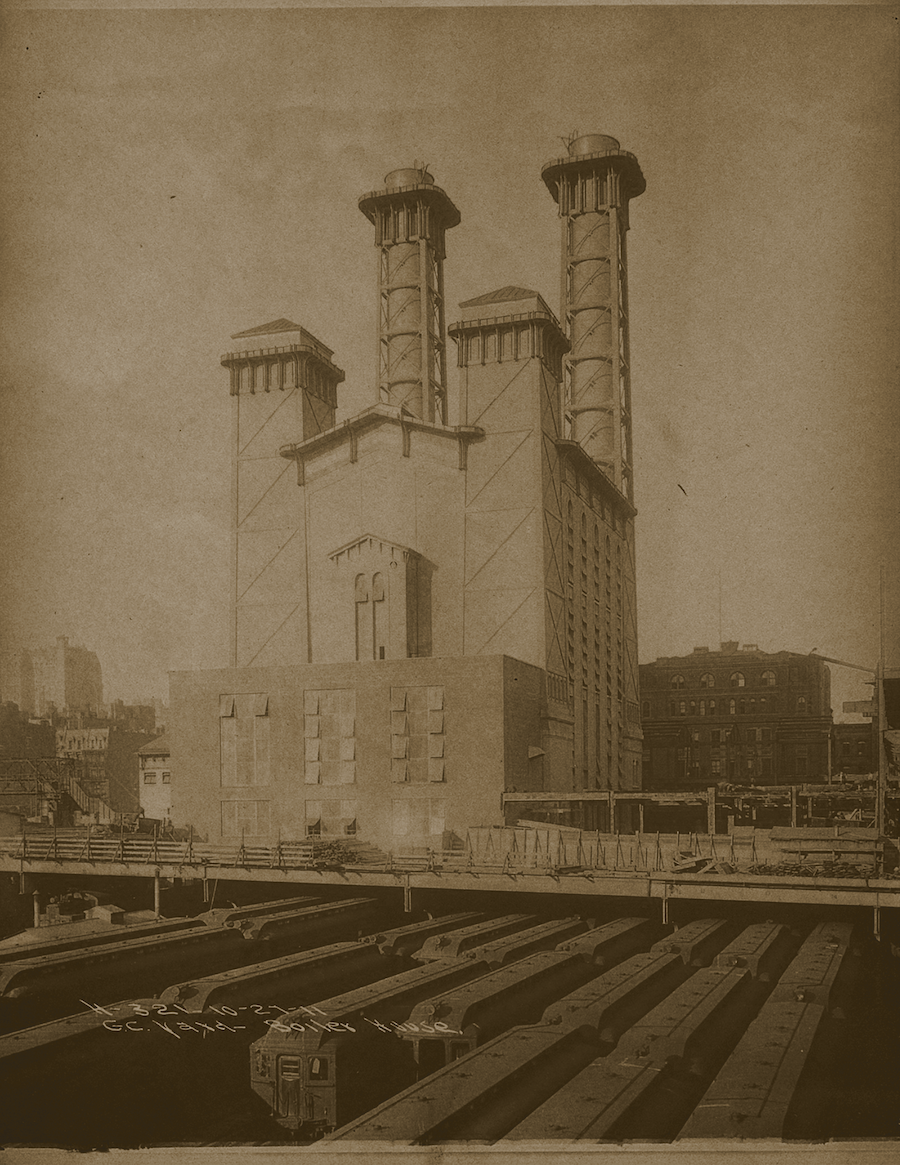
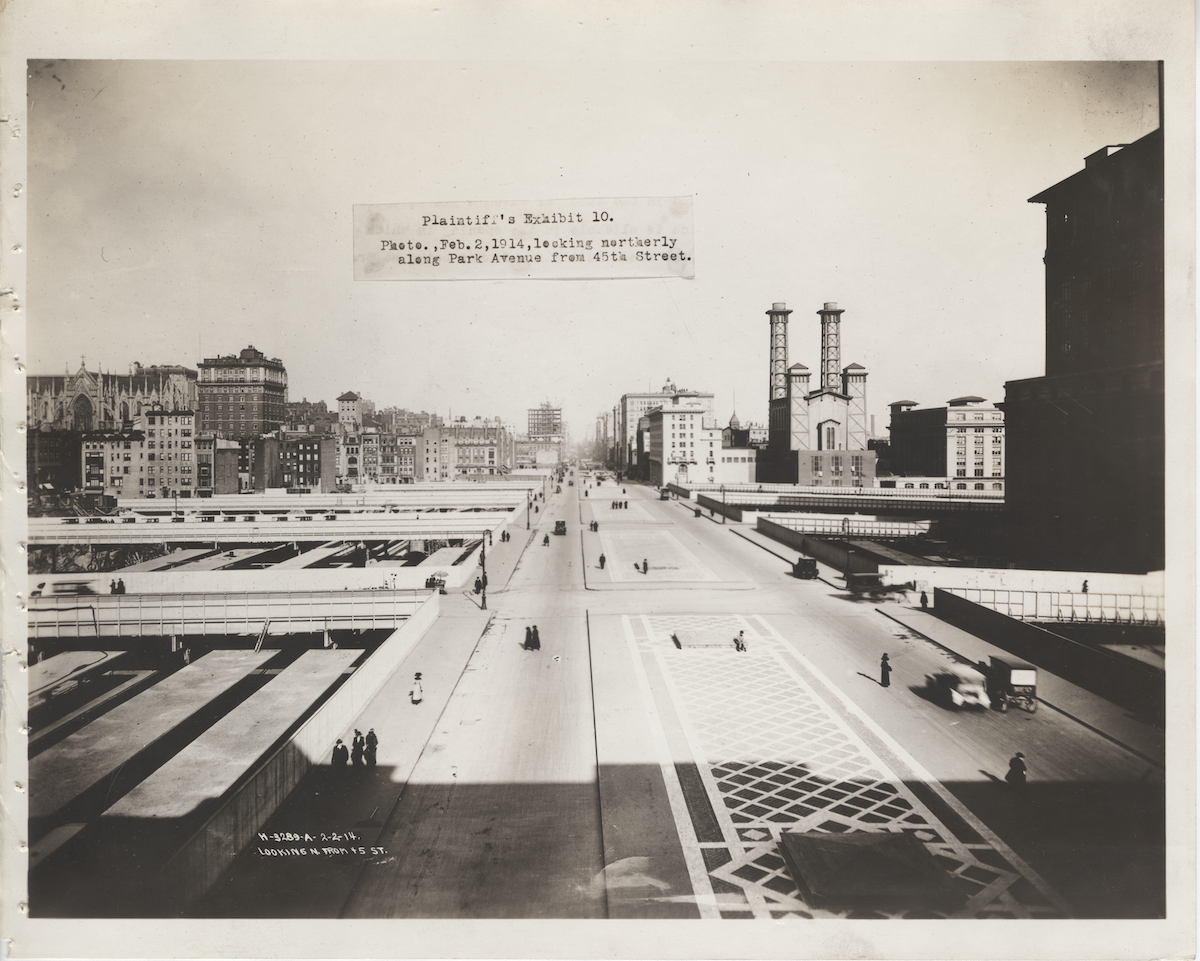
The huge new site, the full block of Park Avenue between 49th and 50th Street and Lexington, was owned by the New York Central and was occupied by tracks and railroad functions, most conspicuously by the power house for the entire railyard. The site was leased to a newly-formed corporation with a board that included railroad executives and industrialists. The planning and operation of the hotel was led by Lucius Boomer, the manager of the old Waldorf.
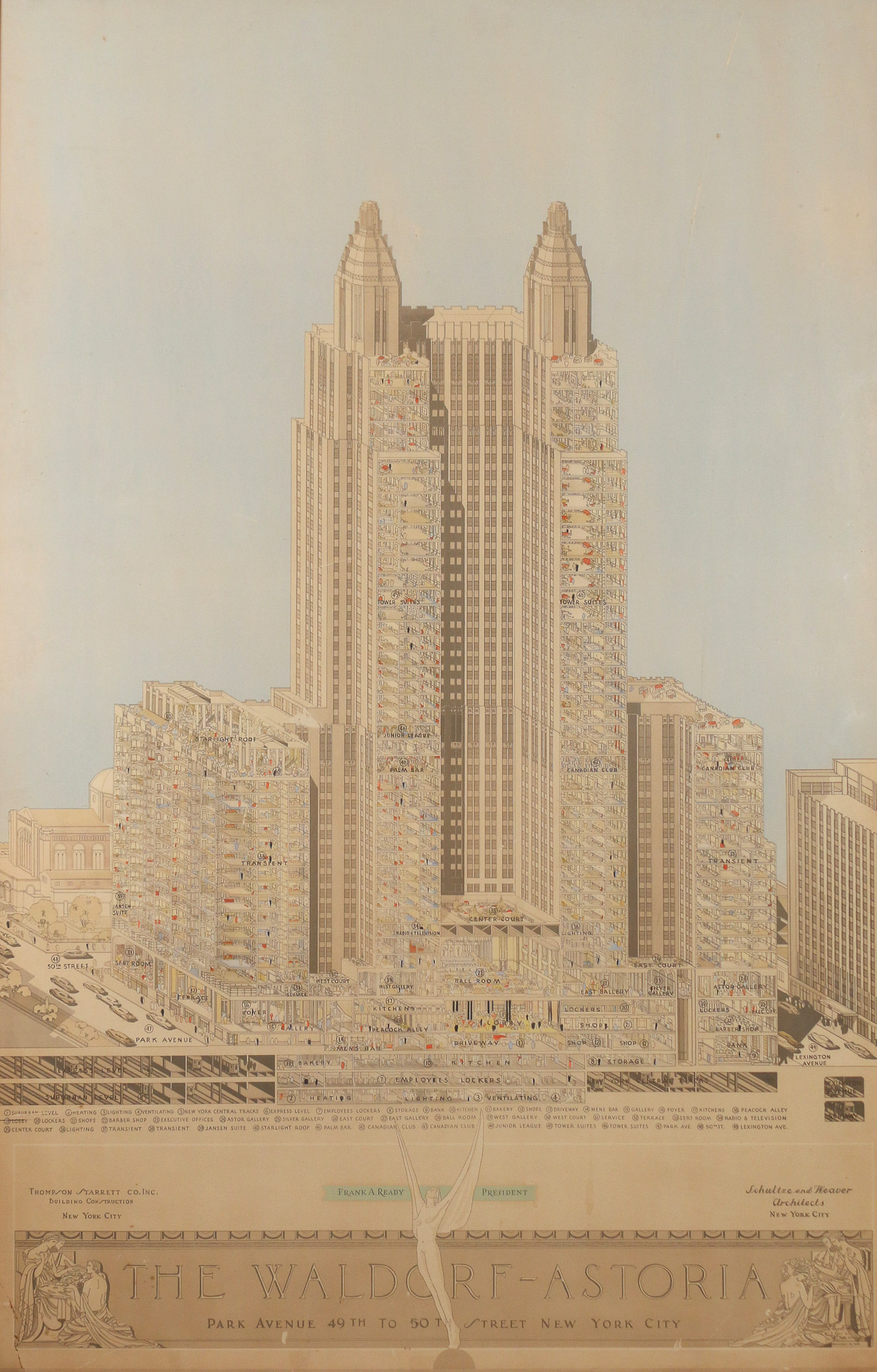
Schultze and Weaver were hired as architects. They were hotel specialists, with a recent portfolio that included the high-end Pierre and Sherry-Netherland at the southeast corner of Central Park and had deep experience in the district. Leonard Schultze had been chief of design for Grand Central Terminal for Warren and Wetmore from 1903 to 1911 and had also led the design for the Biltmore Hotel and many other buildings of Terminal City. In 1921, Schultze founded his own practice with Spencer F. Weaver. Lloyd Morgan, who joined the firm in 1926 and became a partner in 1929, was the lead designer of the Waldorf Astoria. The framed poster on the back of this case is a drawing by Morgan of an architectural section through the hotel that reveals not only the relationship to the tracks below, but the myriad city-within-a-city functions of the social condenser of residence, retail, entertainment, communications, that served New York’s and the world’s high society.
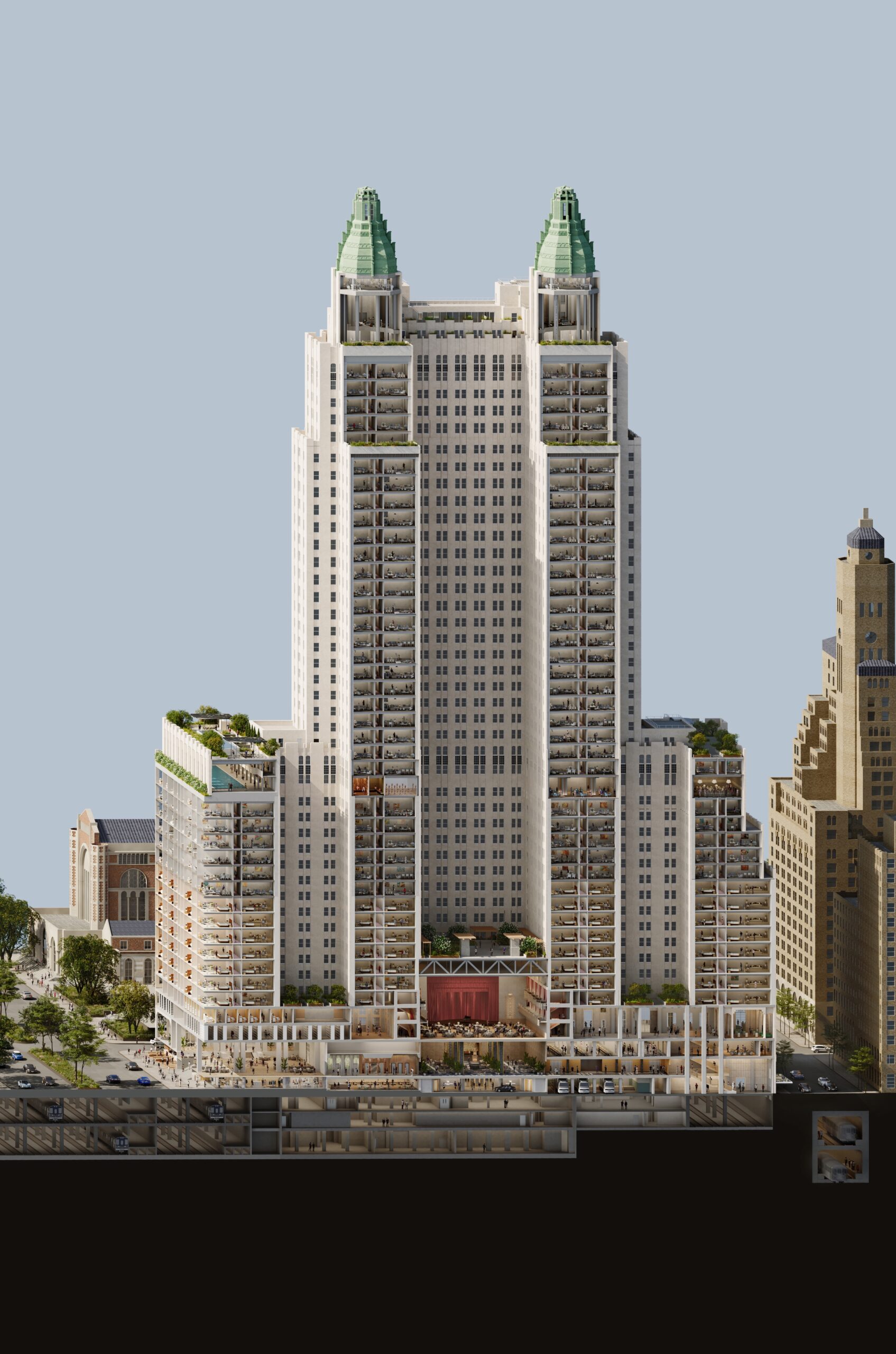
From 1949, the Waldorf Astoria was managed, and then owned, by Hilton Hotels. In 2014, Hilton sold the property to the Chinese company Anbang Insurance Group, which undertook to refurbish the hotel and convert a major part to condominiums. The architects selected for the work, Skidmore, Owings & Merrill (SOM), spent a decade on the project. As both an Individual and Interior NYC Landmark, the careful restoration was closely regulated by the commission. The hotel reopened in July 2025.
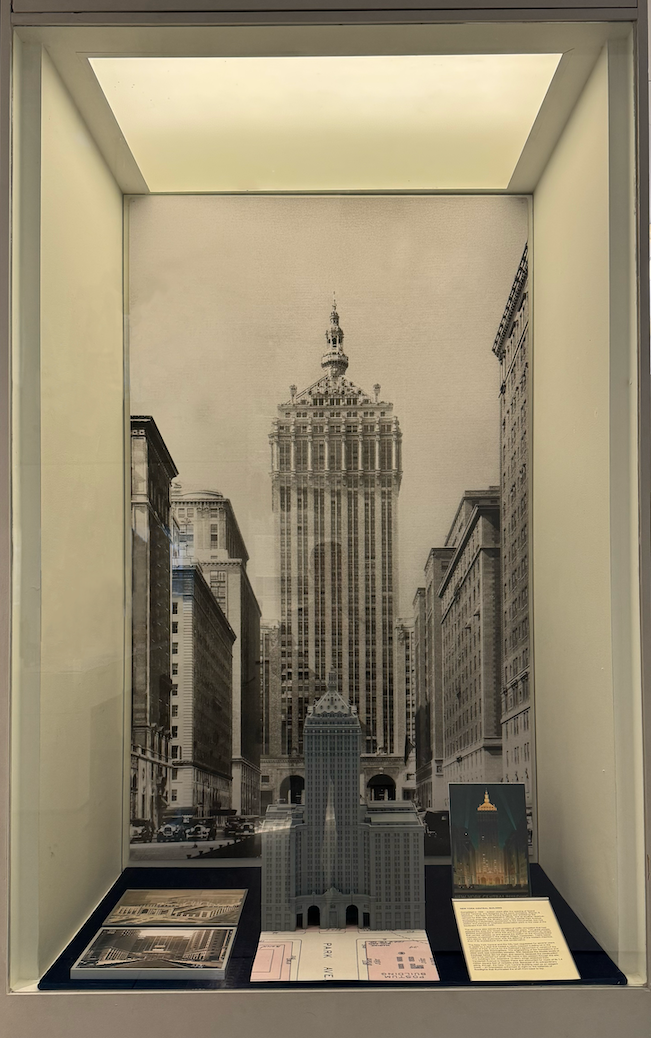
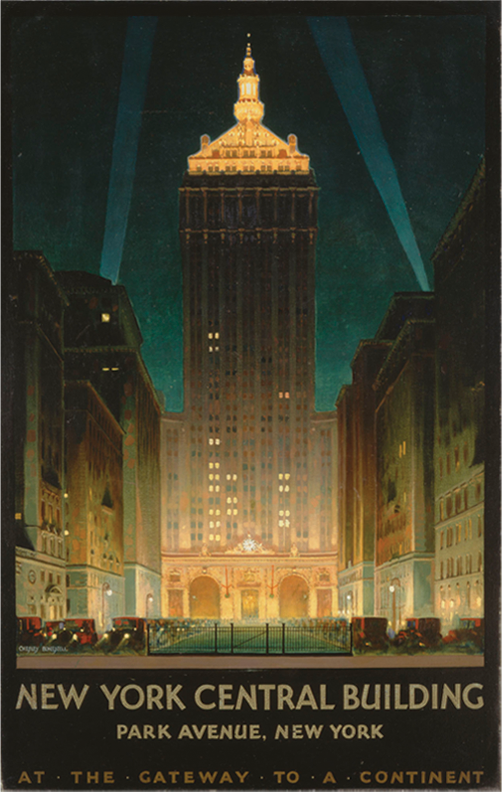
NEW YORK CENTRAL BUILDING
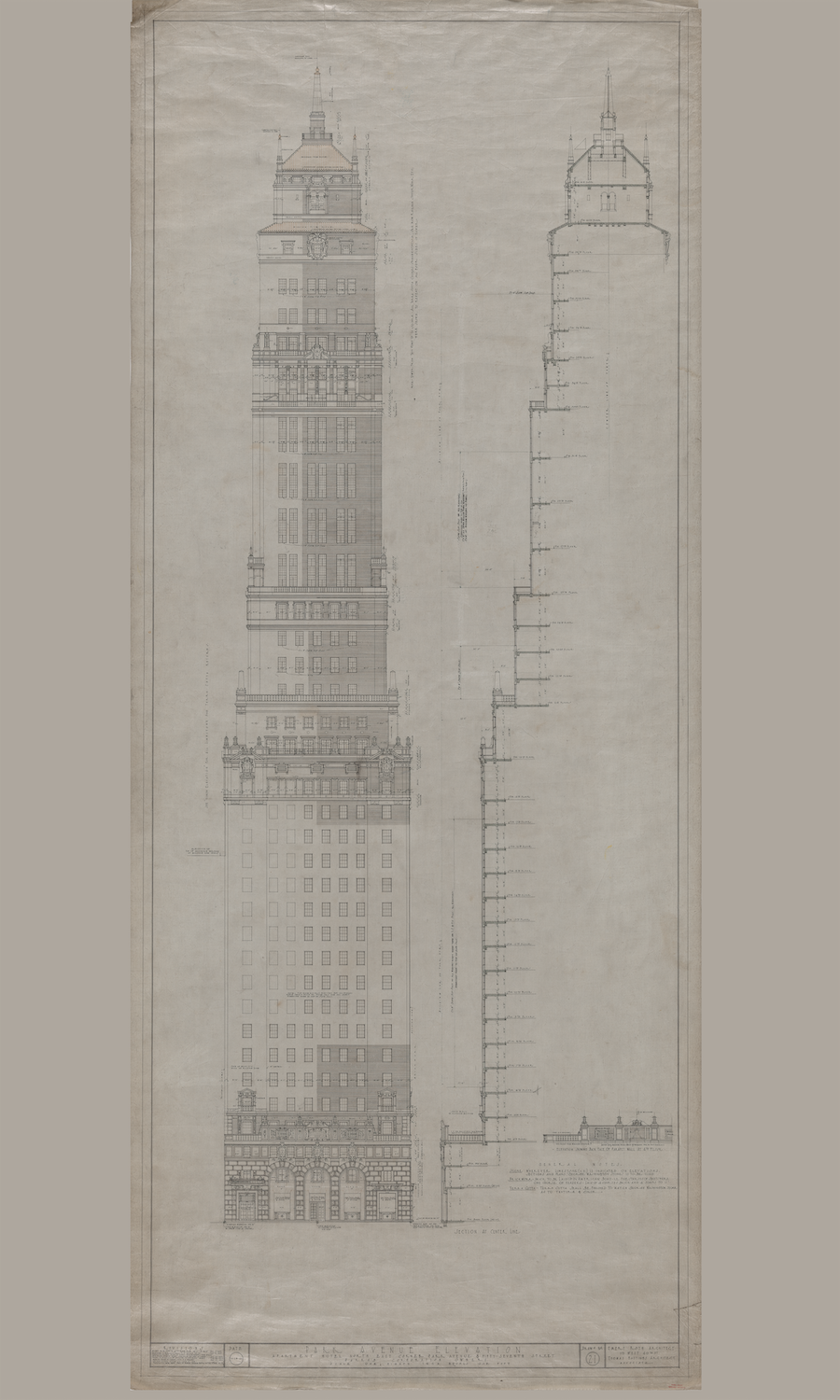
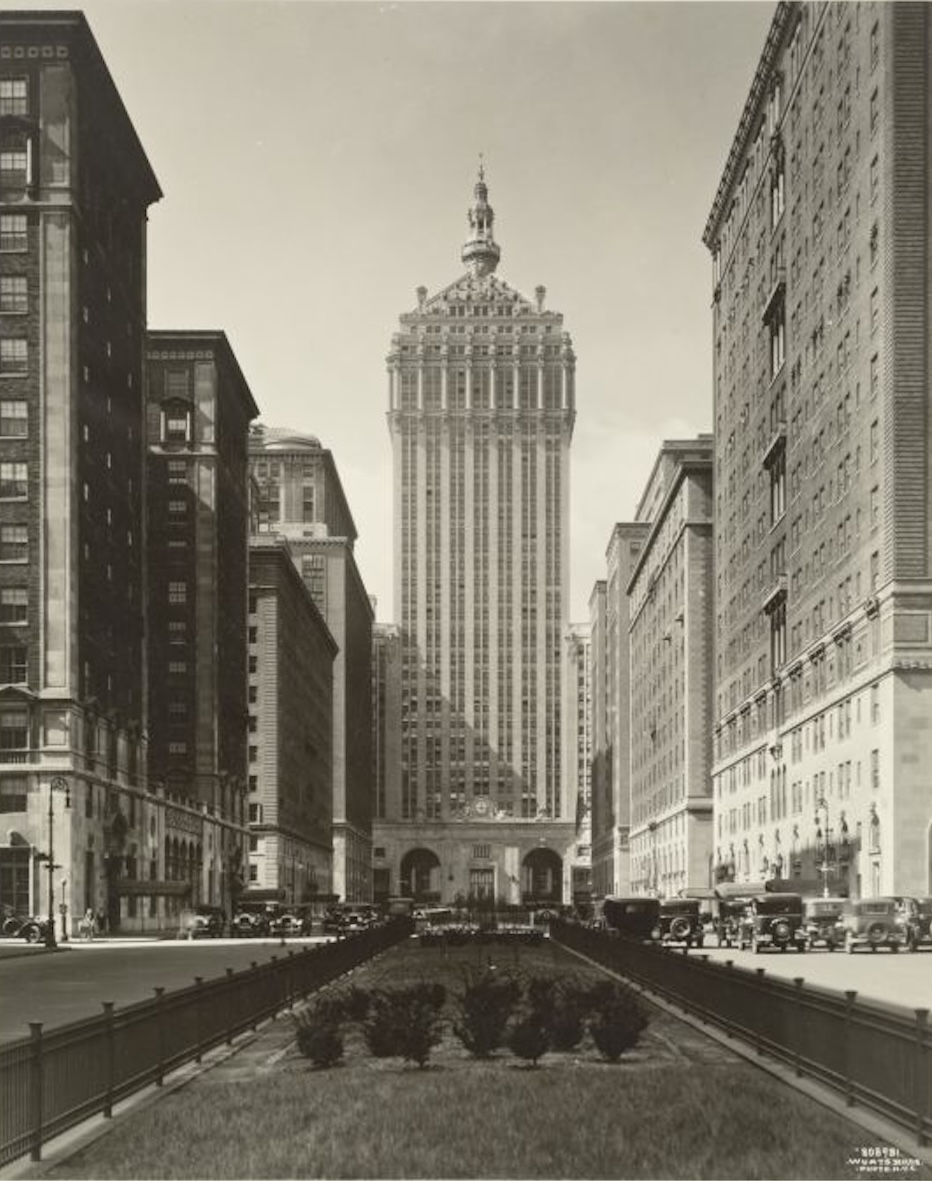
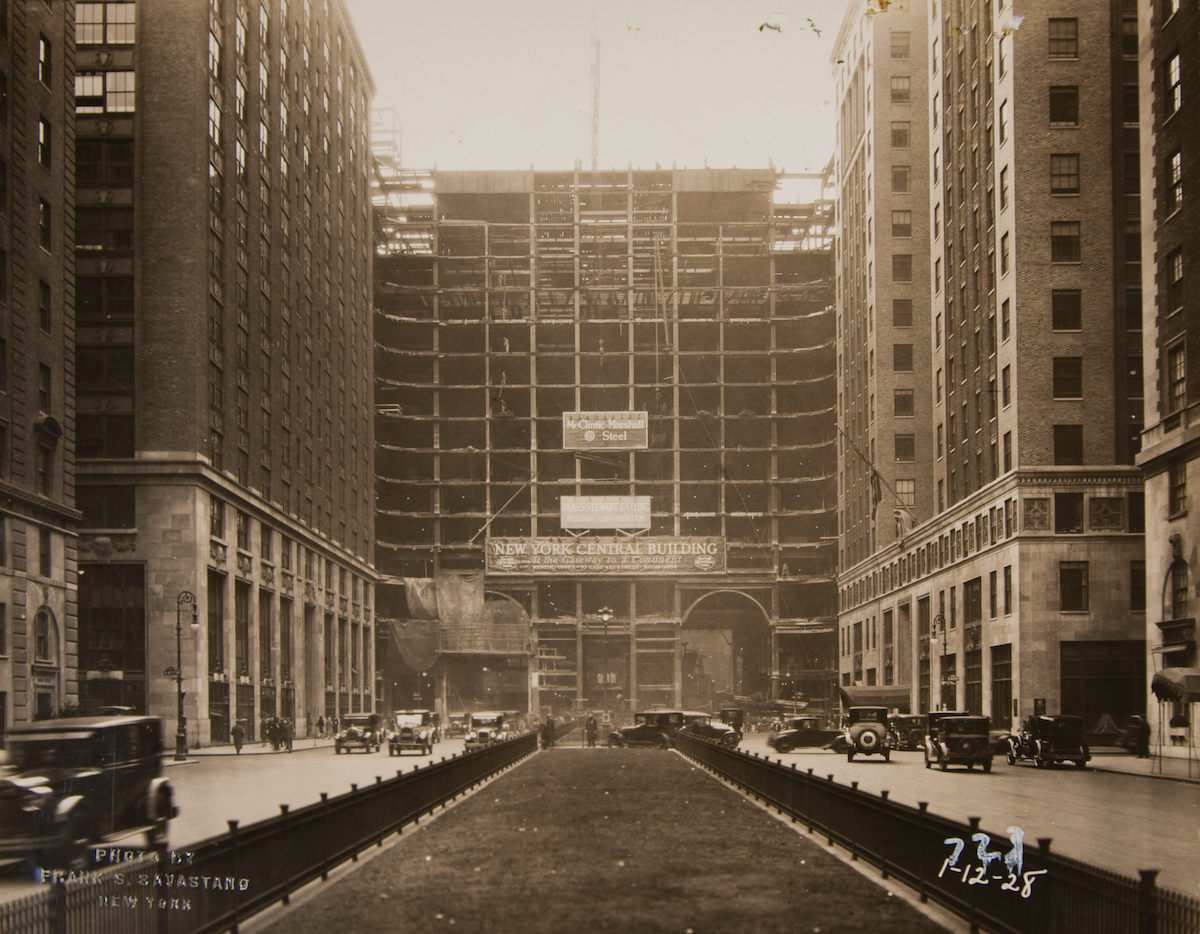
Completed in 1929 – sixteen years after the opening of Grand Central Terminal, and designed by the same architects, Warren & Wetmore – the New York Central Building was erected by the railroad for their new administrative offices, and as another revenue-producing property. The 35-story tower rose astride Park Avenue, establishing a skyscraper counterpart to the monumental, low-rise station and placing an emphatic exclamation point to the vista of the boulevard from the north.
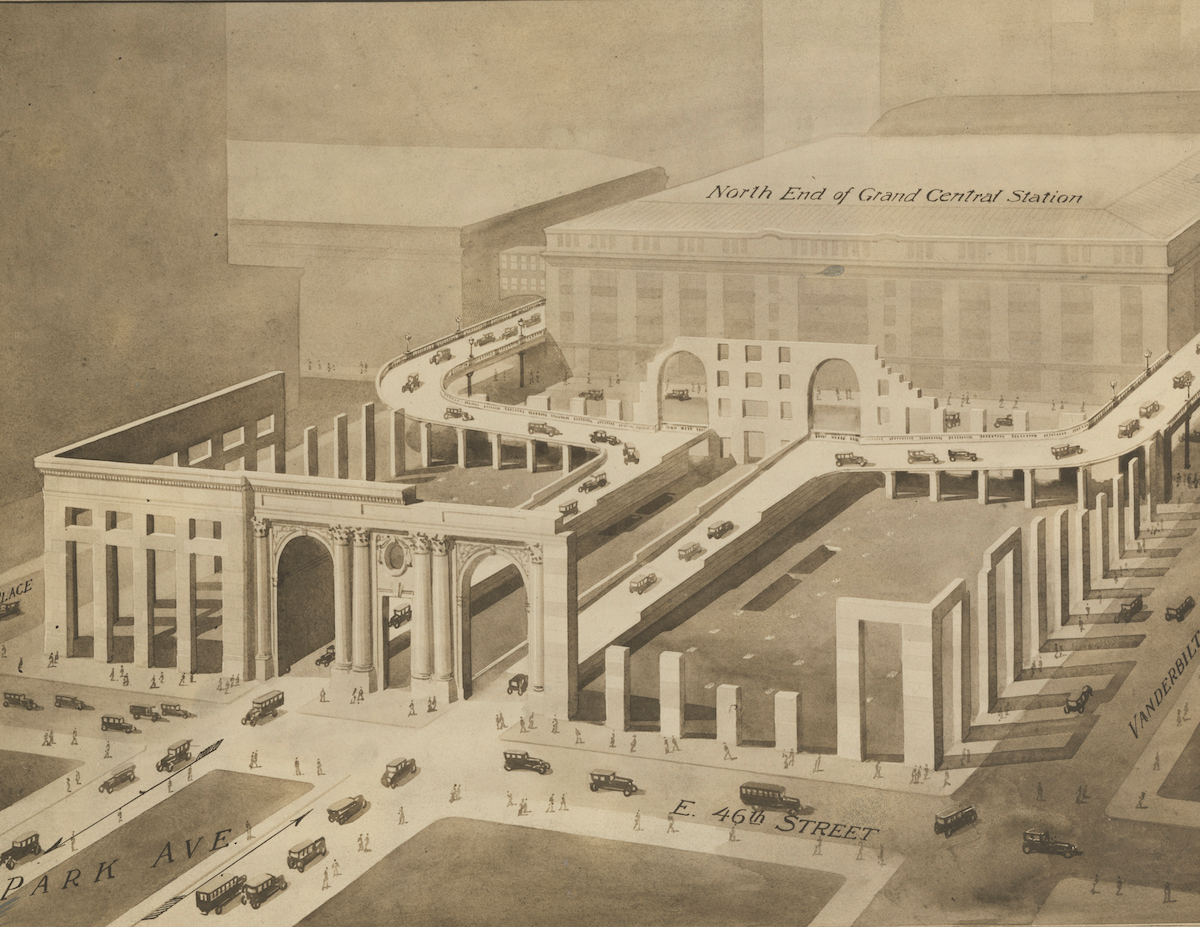
The structure also solved the problem of traffic circulation that had plagued the area and vexed city officials for years. Two great portals allowed automobiles to drive into and through the structure on ramps that carried vehicles up and around the station on the circumferential roadway envisioned in the original Wilgus masterplan. Trains below, cars above: the skyscraper was the epitome of the modern machine, even if its architectural style was conservative.
The New York Central and the City had negotiated for several years to settle on a deal that traded a newly-mapped building lot in the middle of Park Avenue for the Railroad’s agreement to construct the elevated public thoroughfare. The engineering of the foundations and steel work was extremely complex, first, because the double levels of trackage below did not align; and second, because the construction had to be carried out while 700 trains a day passed through the site. The building’s low, extensive 15-story wings stretched from Vanderbilt Avenue to Depew Place and accounted for much of its 1.4 million square feet of rentable area. Because of its extraordinary siting, though, the New York Central Building read as an elegant tower – an impression enhanced at night by the batteries of floodlights that illuminated the shaft from base to top.