
THE TWENTY-FIRST CENTURY
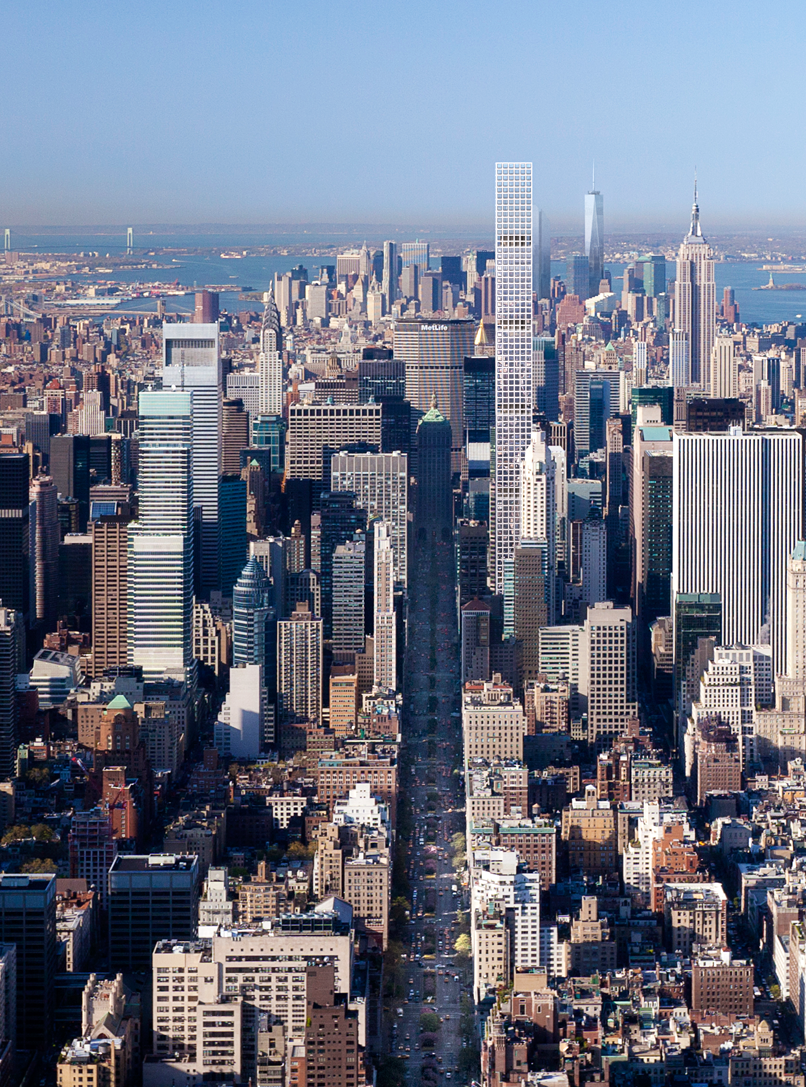
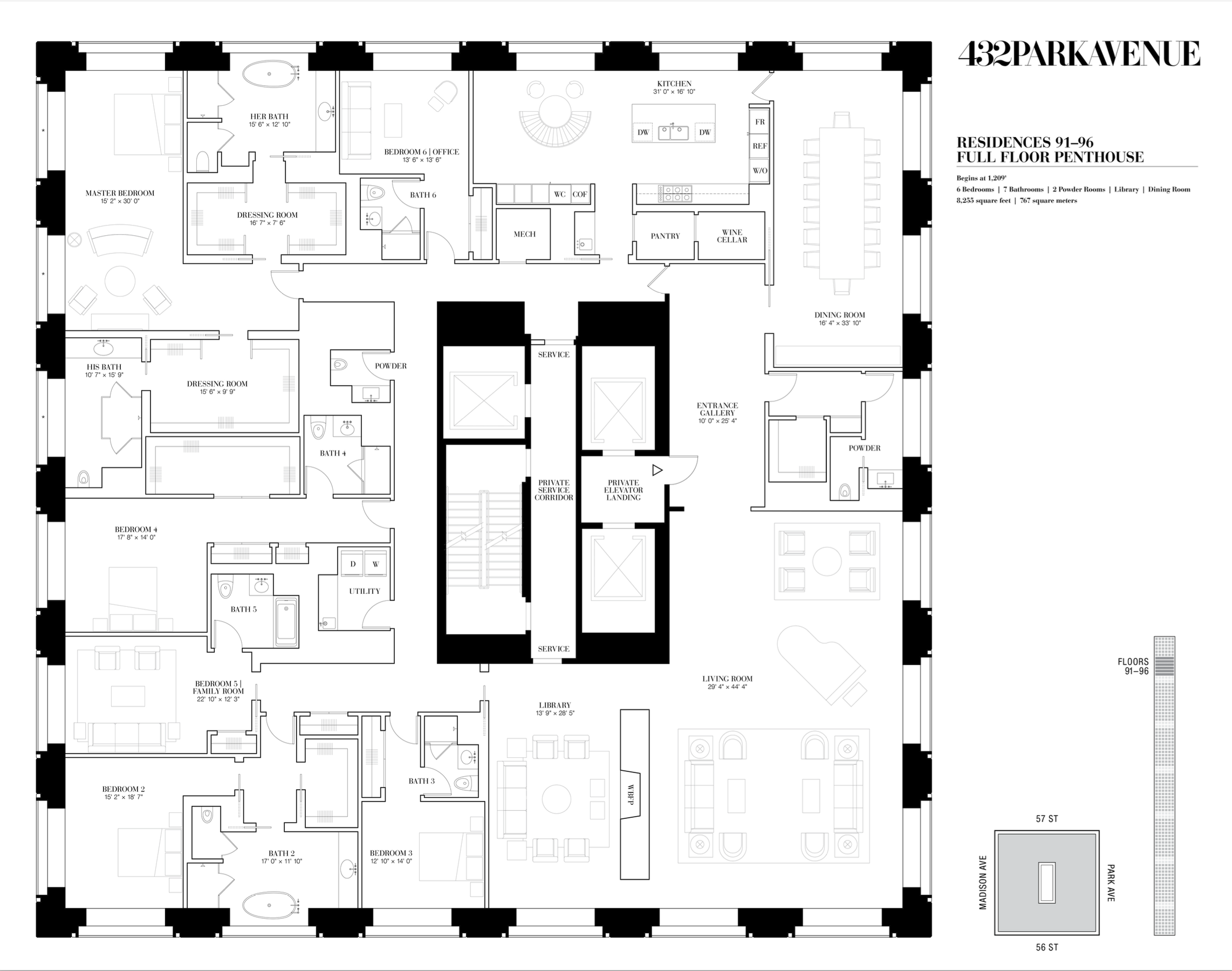
432 Park Avenue, New York, 2015
426 m/ 1,397 ft/ 85 floors
Developer: CIM Group and Macklowe Properties
Architect: Rafael Viñoly Architects (RVA), model on loan from RVA
Structural Engineer: WSP

RESIDENTIAL RETURN: 432 PARK AVENUE
With a flat rooftop that squares off at 1,396 feet, the super-slender condominium tower, 432 Park Avenue became the tallest residential building in the city on its completion in 2015. Although it has since been surpassed by two taller and even skinnier supertalls on Billionaire's Row, architect Rafael Viñoly's grid of squares stretched higher than the 1,368-foot roof of One World Trade Center, and of the original WTC Tower 1, which at that same height was the world's tallest building from 1971 to 1974.
432 Park marked the return of luxury residential architecture to the avenue as the proverbial "highest and best use" of valuable land and echoed the rise in 1926 of the Ritz Tower, just a block north on 57th Street. Its astonishing height was made possible by the provision of the 1961 zoning law that allowed for the purchase and transfer of unused “air rights” from adjacent properties. This definition of “air rights” differed from William Wilgus’s concept of creating value above the railroad’s tracks.
Until the passage of the City's first zoning law in 1916, there were no regulatory constraints on building bulk or total floor area. In 1961, a new, more restrictive code capped the maximum floor area, or FAR, permitted on a given lot. A developer could, however, buy unused FAR from neighboring lots and add them onto his new building. For 432 Park, developer Harry Macklowe purchased unused FAR from adjacent buildings, as well as the 21-story, 1926 Drake Hotel on Park Avenue, which was demolished in order to pile its FAR into extra floors of the slender tower.
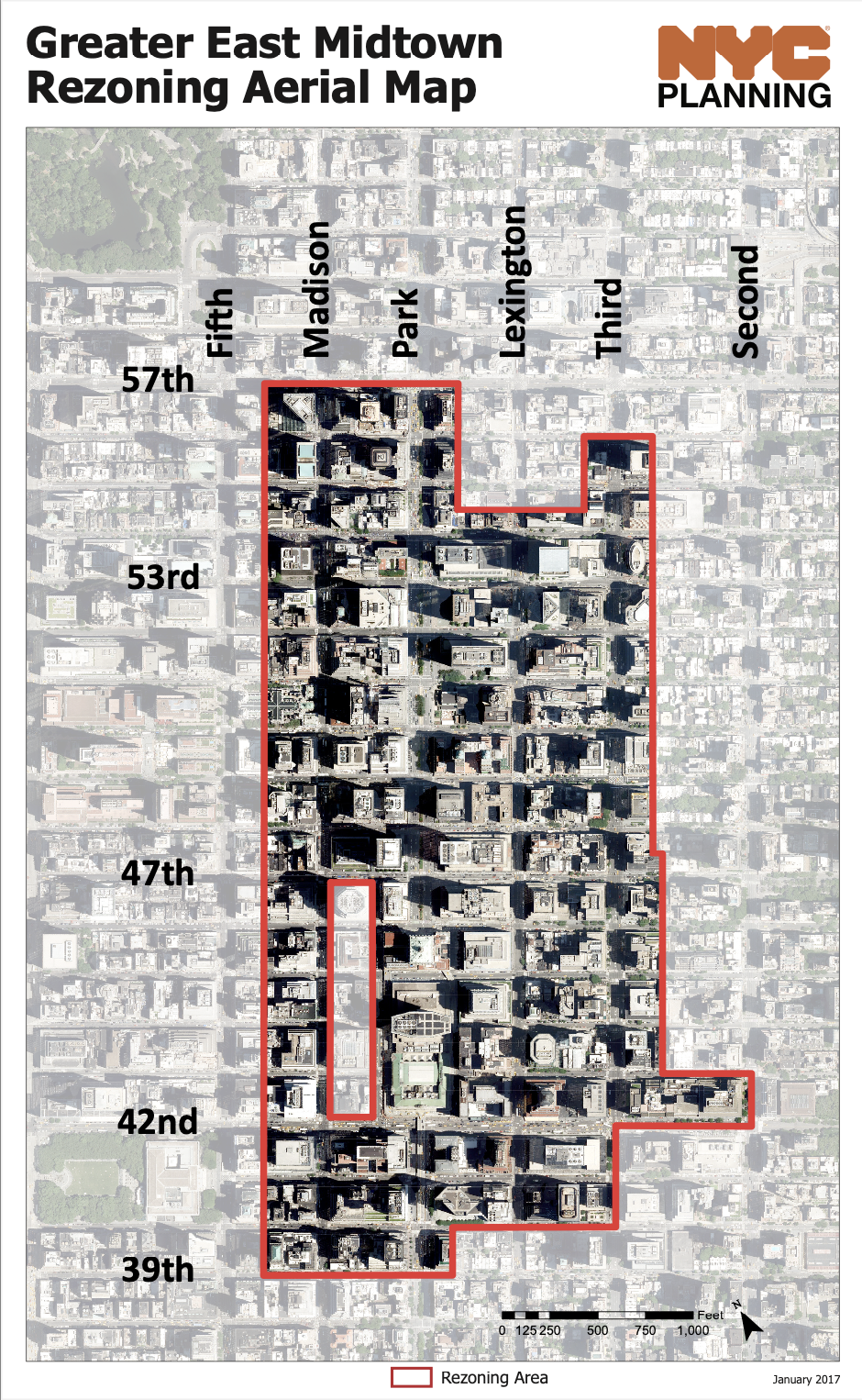
This zoning provision of purchasable, transferable, air rights is the key feature driving both the unprecedented height of the “pencil towers” of Billionaires’ Row and the new generation of office towers in the Grand Central zone of East Midtown, including the JPMorgan Chase tower and the future 350 Park Avenue.
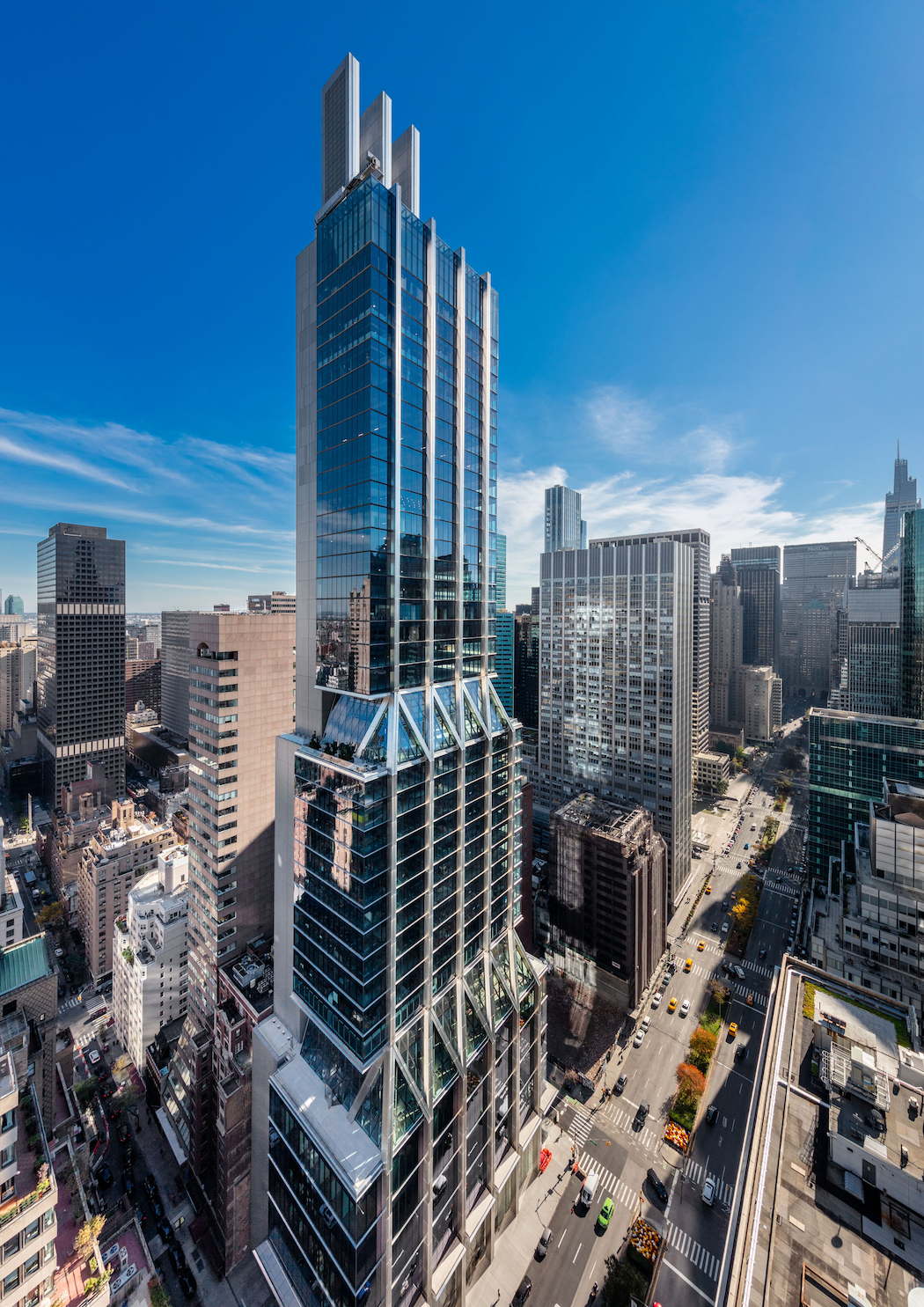
425 PARK AVENUE
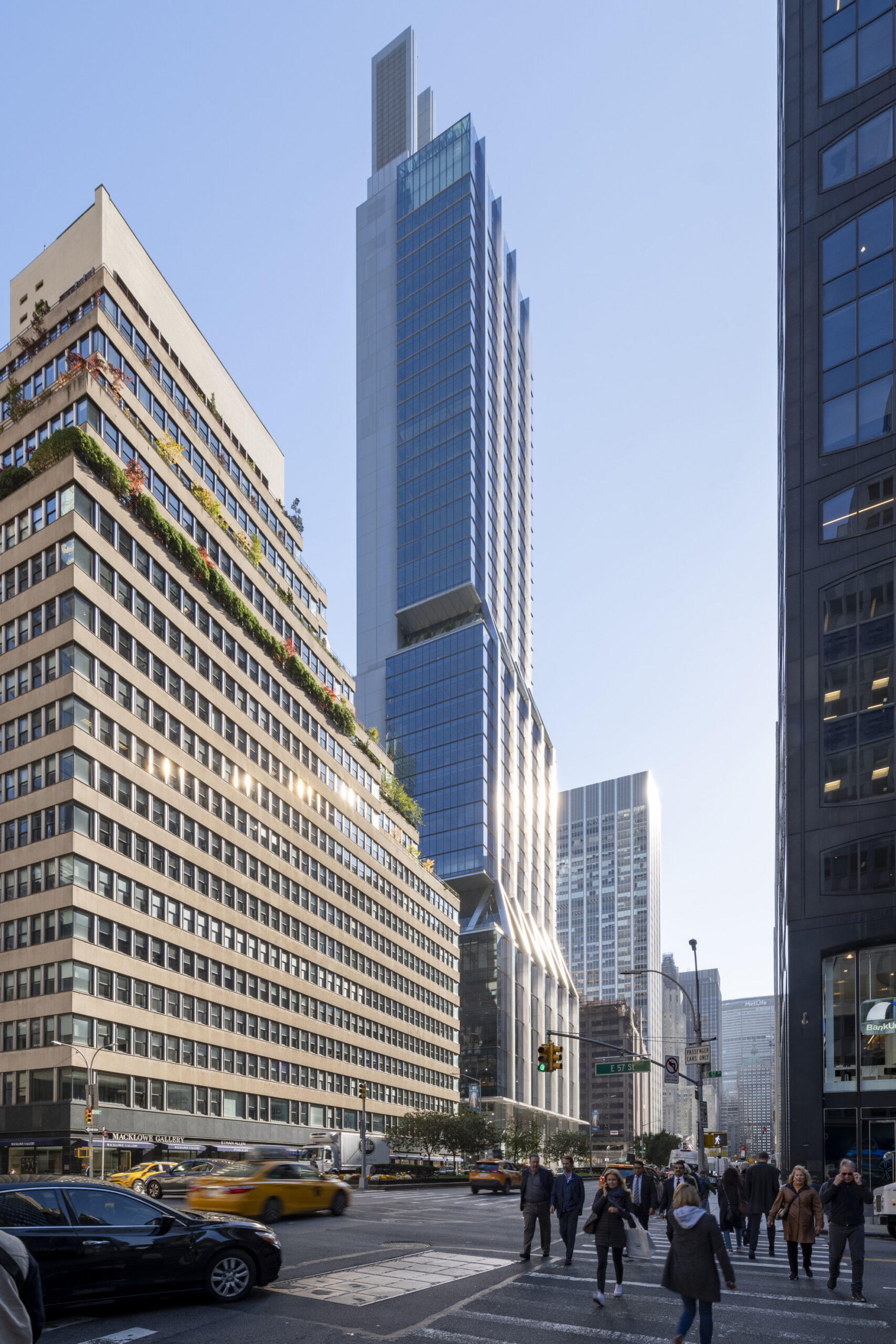
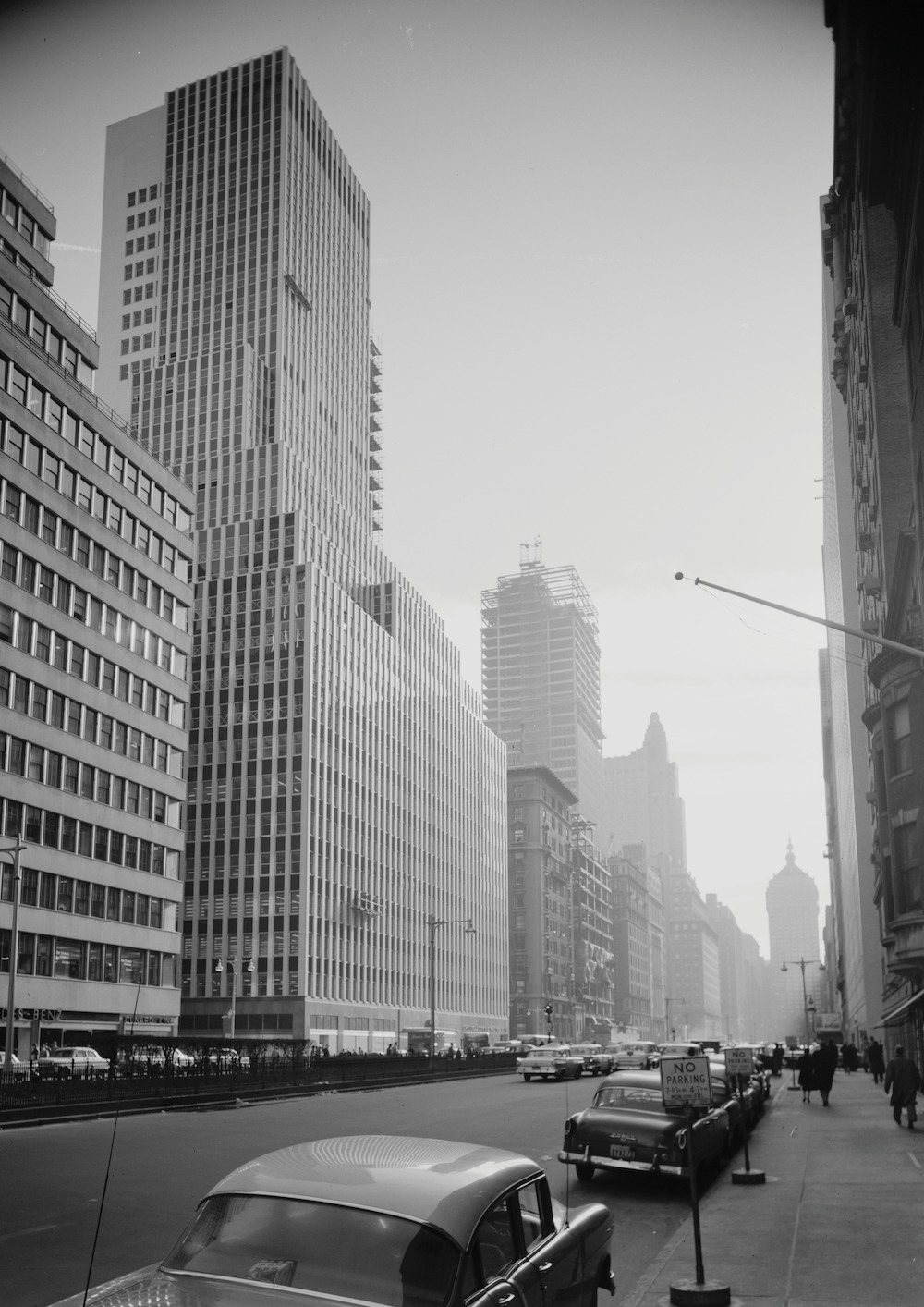
Most real estate projects in Manhattan are complicated by multiple owners, leaseholds, or financial partners – but the development of the skyscraper at 425 Park, between 55th and 56th Street, is a saga of staggering complexity that spanned two decades. The partners of L&L Holdings first purchased a minor interest in the 31–story, 1957 setback office building on the site in 2004, then a ground lease in 2006, and then waited until 2015 to be in the position to demolish it for a new tower. A contemporary of Lever House and Seagram, the modernist 425 Park was designed by the prolific firm of Kahn & Jacobs (like its shorter neighbor to the north, 445 Park). However, it eschewed the new straight-up slab form to pack its 670,000 sq. ft. of floor space into a bulky “wedding cake” massing that wasted not a square foot of floor area allowed under the prevailing 1916 zoning law.
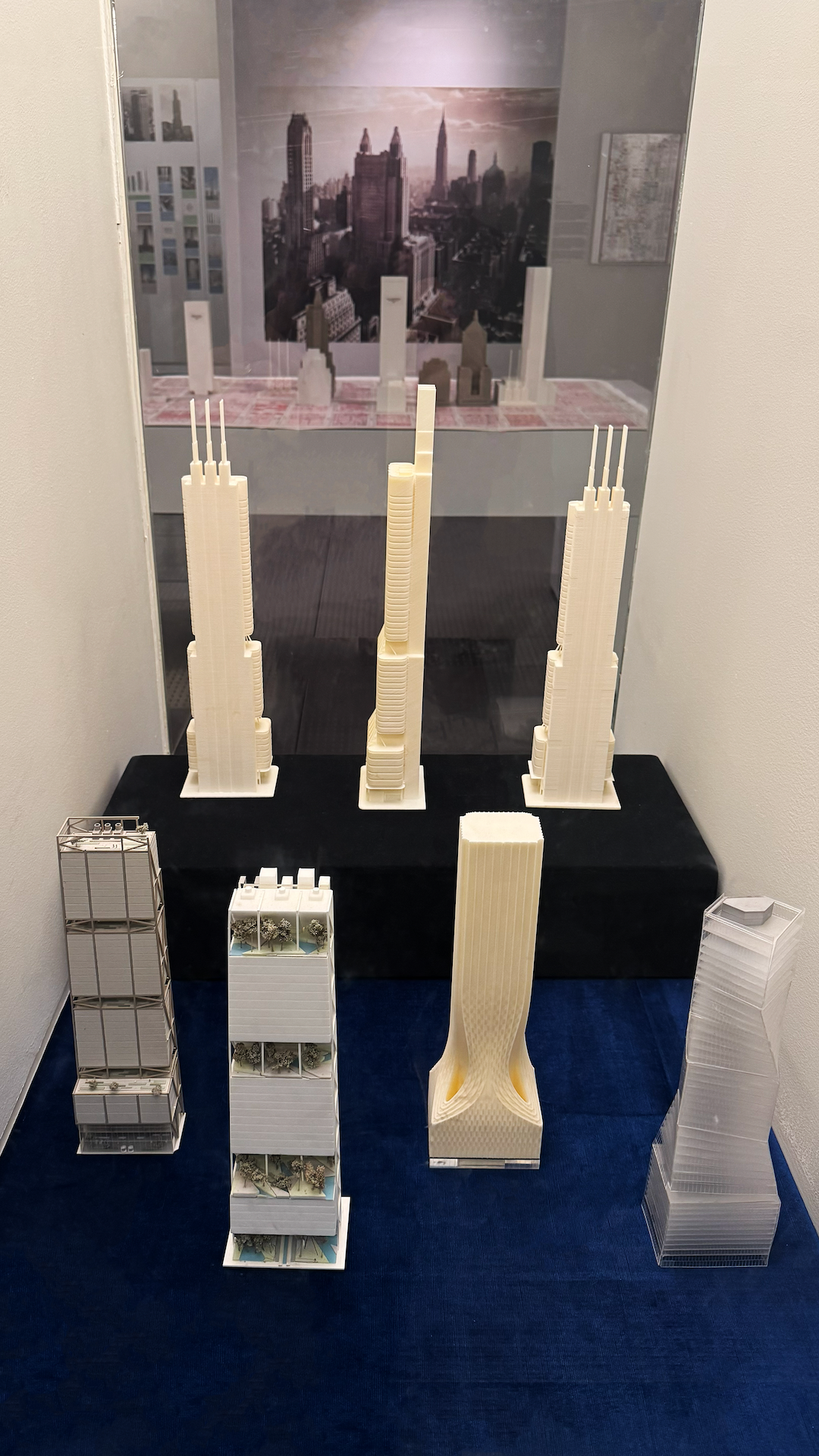
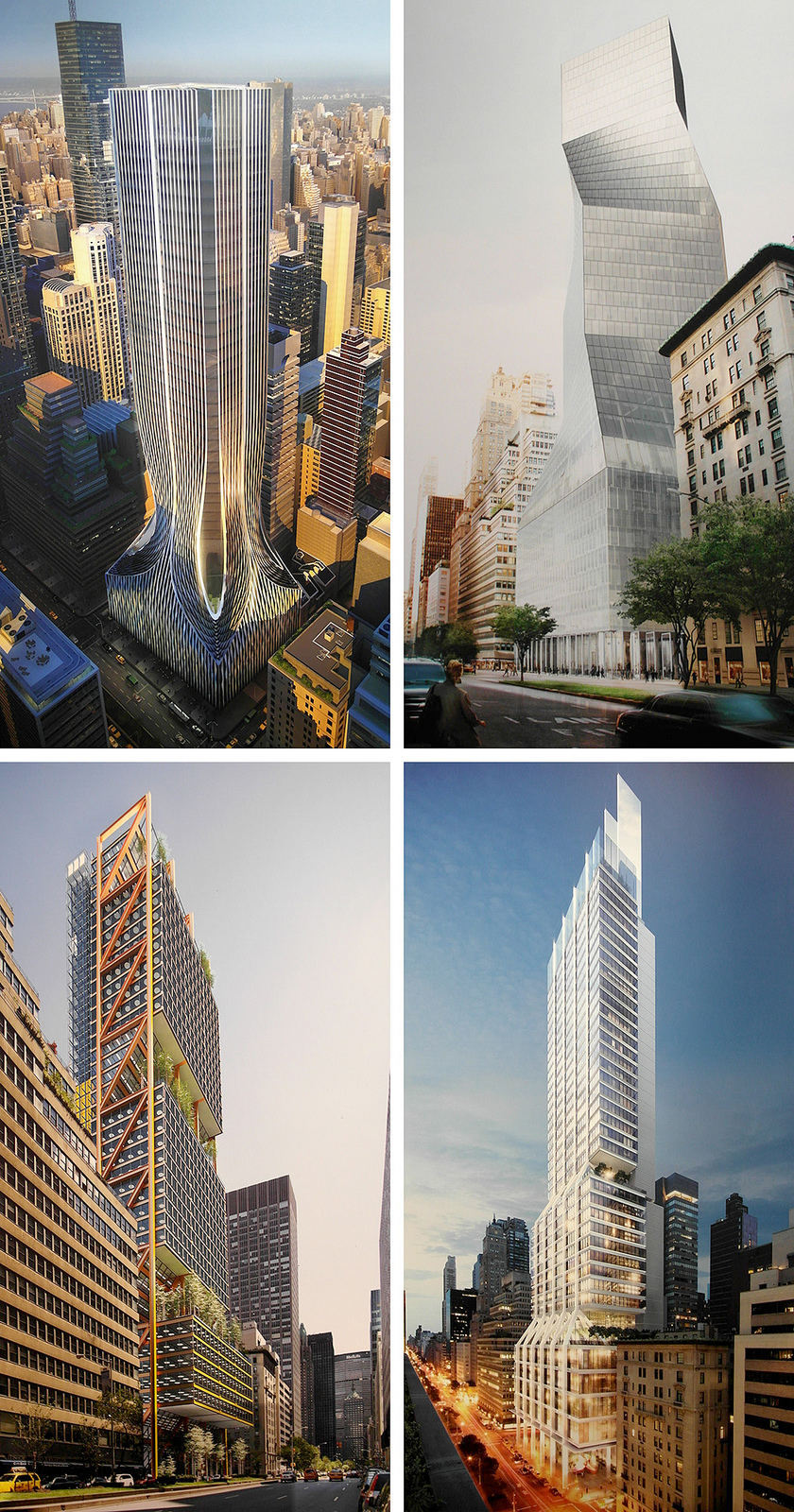
The L&L Holdings partners David Levinson and Robert Lapidus had the ambition to create a new type of 21st-century skyscraper on Park Avenue that would rival the postwar icons as a statement of forward-thinking design. In an era when the term “starchitect” was at its height, L&L decided to undertake a limited competition for the commission, inviting eleven forms to submit a proposal. They then narrowed the field to four contenders, all Pritzker-prize architects. Models of their projects are shown on the other end of this vitrine. The victor was Lord Norman Foster and his firm Foster+ Partners.
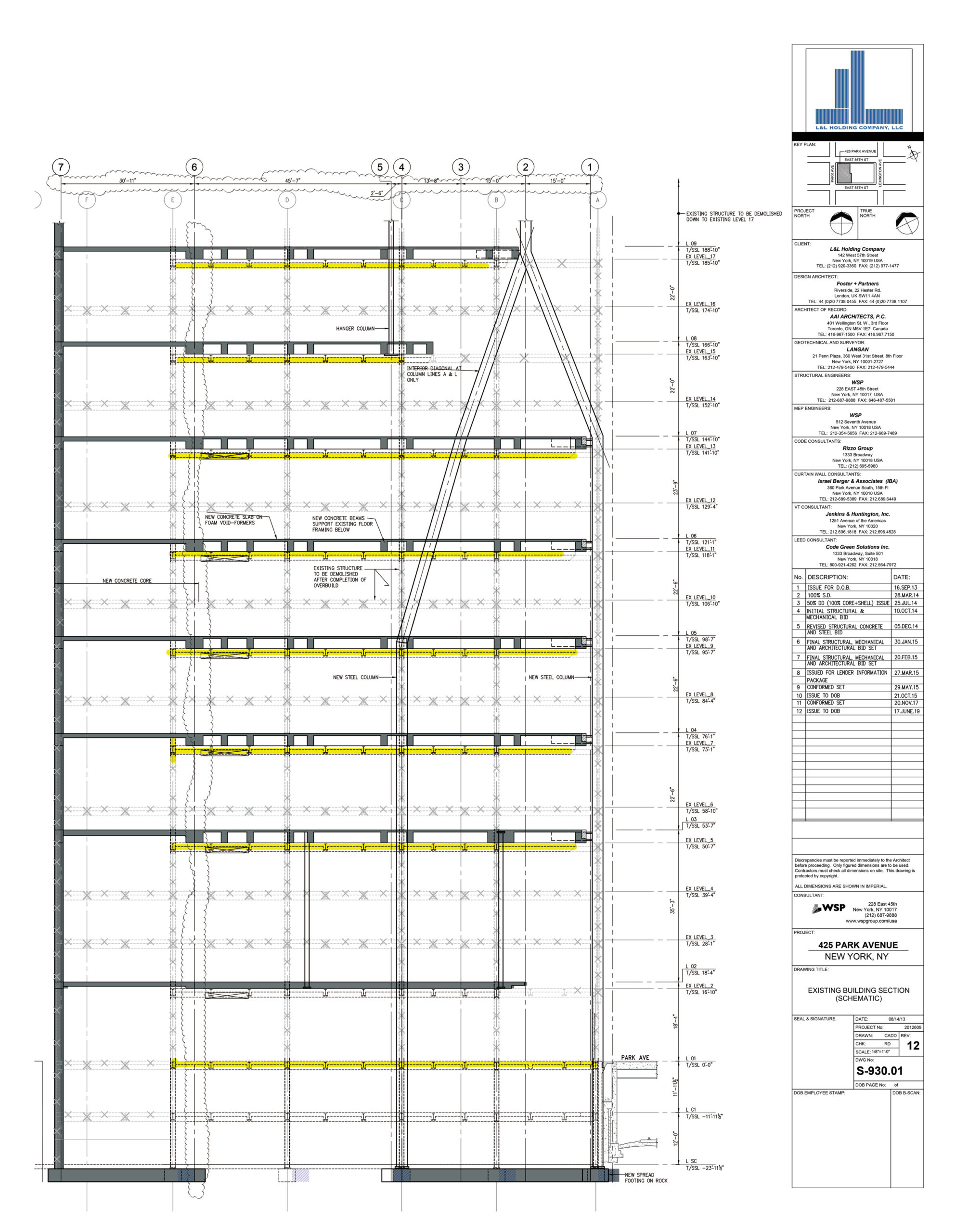
The Foster design rearranged the 670,000 sq. ft. of floor area – the maximum available under the zoning restrictions – in 47 stories in three volumes, connected by double- or triple-height amenities floors framed by great diagonal stainless-steel trusses. With a final height stretched to 860 ft./ 262 m. by the three concrete fins that marked the off-center core – from which the column-free office floors projected – Foster’s skyscraper was more than twice the height of the 1957 building. An engineer’s drawing of a section of the structure that shows the original steel skeleton, as well as the new structure is reproduced on the outside of this case.
Three preliminary study models (background) and four competition entry models (foreground)
860 ft/ 262 m/ 41 floors
Architect: Foster + Partners
Models on loan from L&L Holding Company
425 PARK: OFFICIALLY A RENOVATION
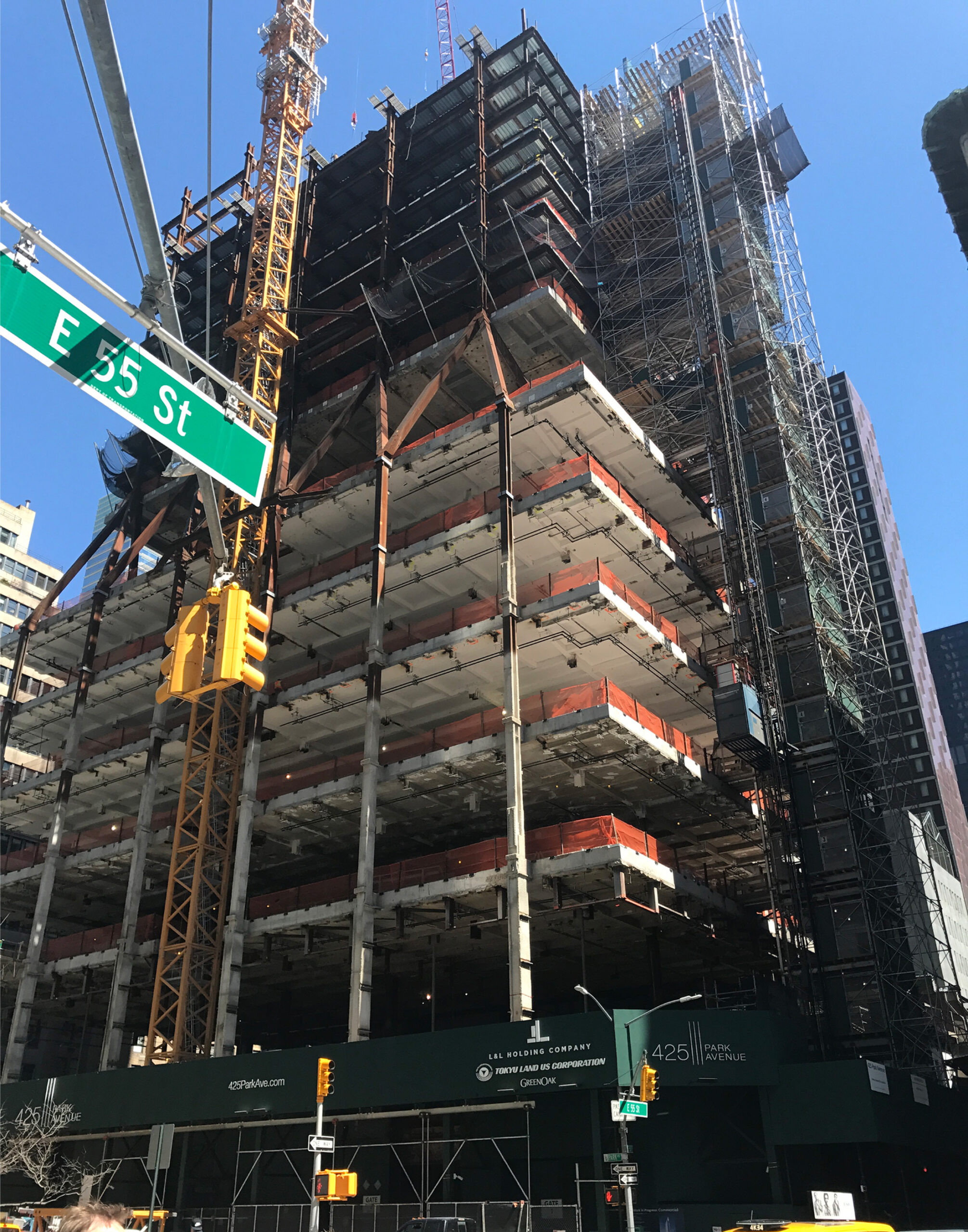
The design and construction of the present-day tower at 425 Park Avenue and the demolition of the skyscraper it replaced was an enormously complex project that dramatically illustrates the high stakes at play within the constraints of New York’s zoning law and the value of maintaining and maximizing FAR (floor area area).
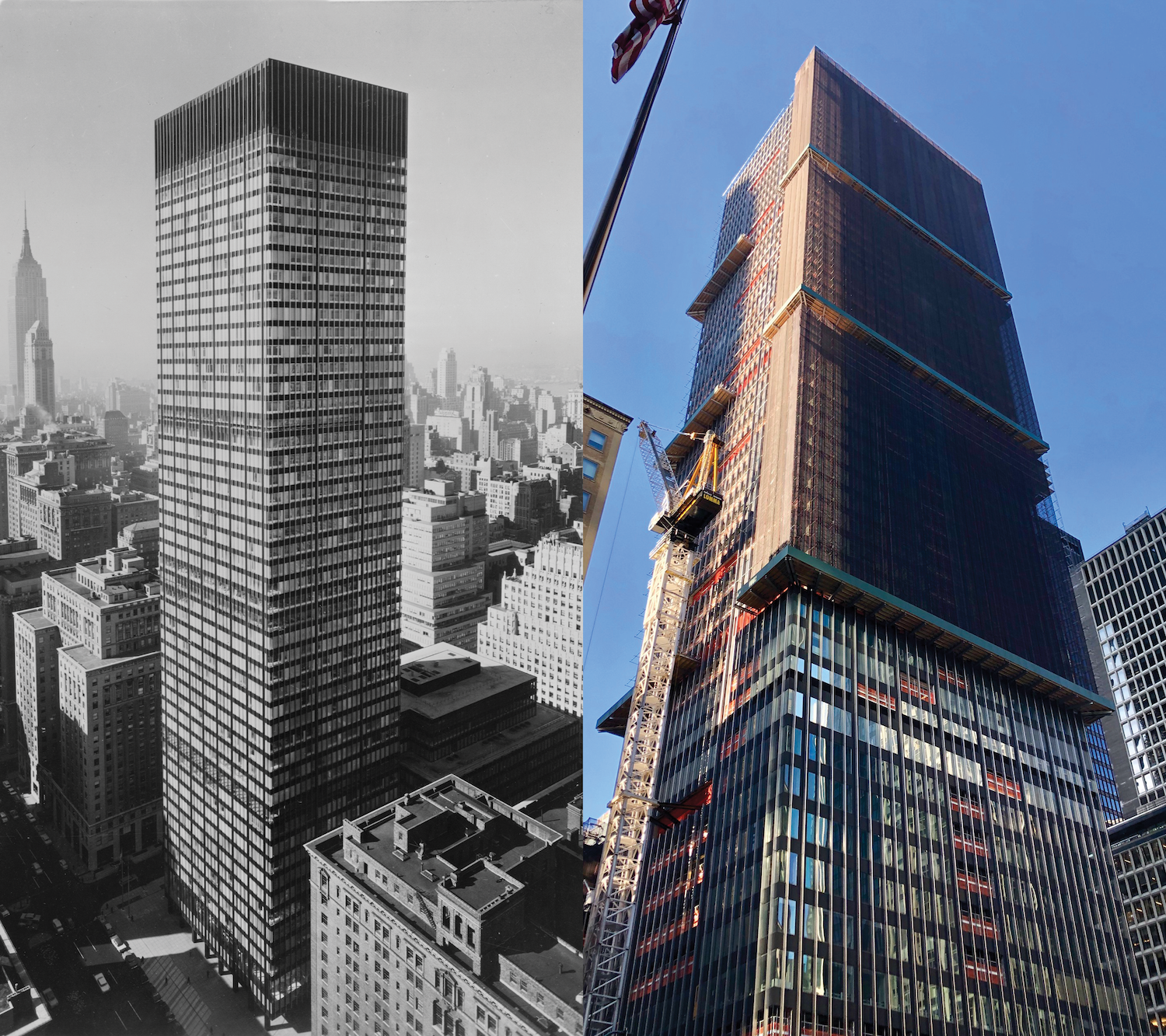
Completed in 1957, the setback form of the 31-story skyscraper at 425 Park Avenue was a pure expression of the maximum massing allowed by the city's first zoning law, passed in 1916. As a result, it contained substantially more floor area than would be allowed under the new code, passed in 1961.
In general, when an older building is demolished to erect a new one, the current, more restrictive zoning would apply. This rule discouraged new development that would have less rentable floor area. However, a loophole in the 1961 code stated that renovations that retained a minimum of 25 percent of the floor area of the original building could keep its full floor area. As a result, L&L Holding undertook – at enormous expense, but one the developer calculated would be repaid over time – to demolish three-quarters of the older building, leave one quarter of the floors of the old structure, and build the new tower around it.
The structural engineer’s drawing at the right diagrams the process by which the new frame, with higher floor-to floor-heights, was erected around the remnants of the old building. Seven existing floors were retained and suspended on the new structure; the ground floor was also retained and counted.
270 PARK AVENUE
The new global headquarters of the powerful bank JPMorgan Chase is the third high-rise to cover the full-block site from 47th to 48th Street and from Park Avenue to Madison since the completion of Grand Central, and it is by far the largest and tallest. Its size reflects both advances in building technology and a proactive shift in City policy that in 2017 rezoned the Grand Central District to allow developers to erect more bulk and floor area than was allowed under the 1961 zoning law.
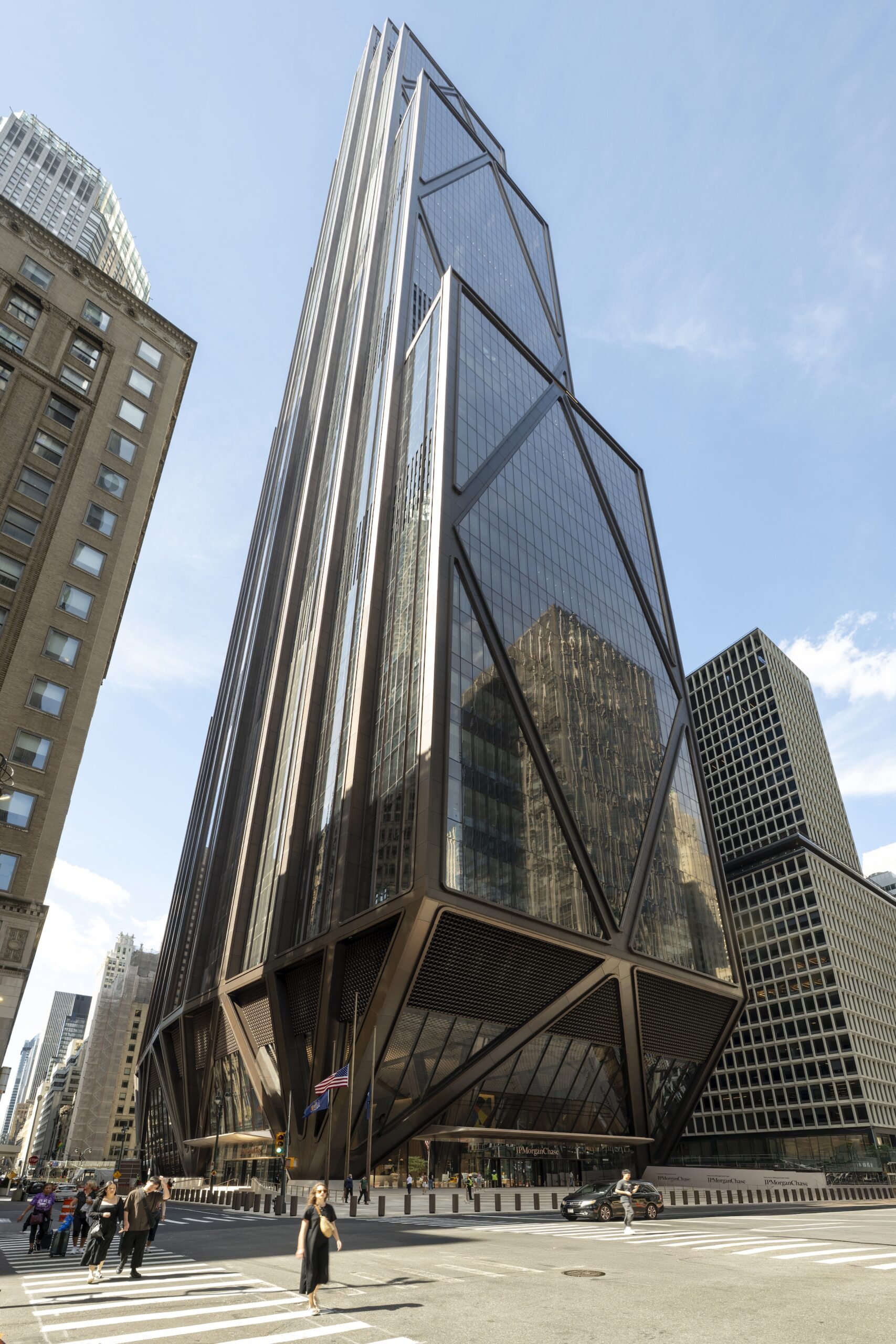
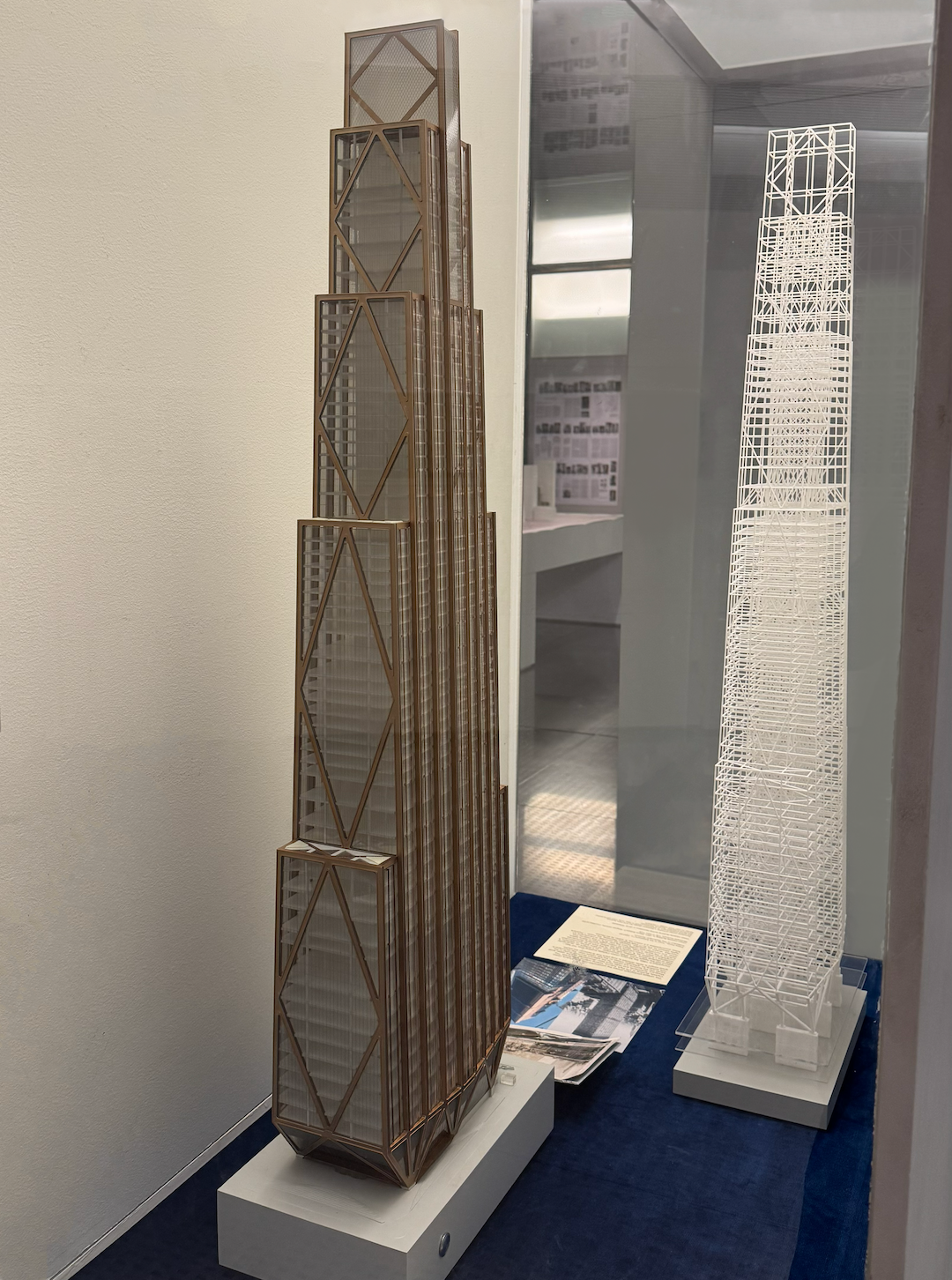
The skyscraper’s design by British architect Lord Norman Foster and his New York office of Foster + Partners plays on two New York traditions: the setback silhouette of the 1920s skyline and the distinctive bronze glass and metal curtain wall that evokes the richness of materials of Mies van der Rohe's Seagram Building five blocks north. The distinctive diamond-shaped trusses expressed on the facade help to securely and efficiently frame the structure, which sits atop a massive truss that transfers the weight through the fan-shaped diagonals at the base to points of support between the railroad tracks. The pairing of the architectural and structural models here shows the relationship of the form and the engineers’ system of columns, trusses, and open spaces within the structure.
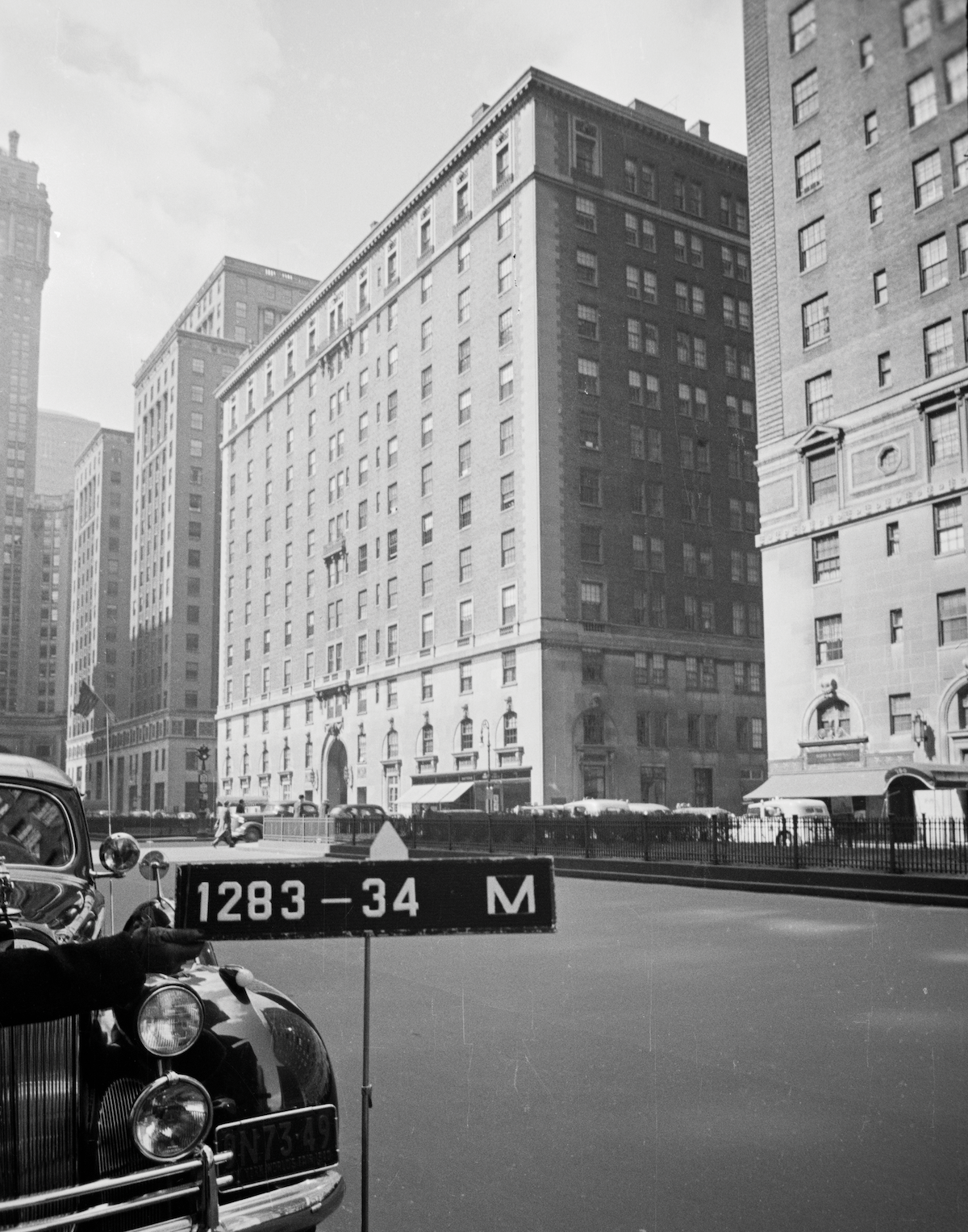
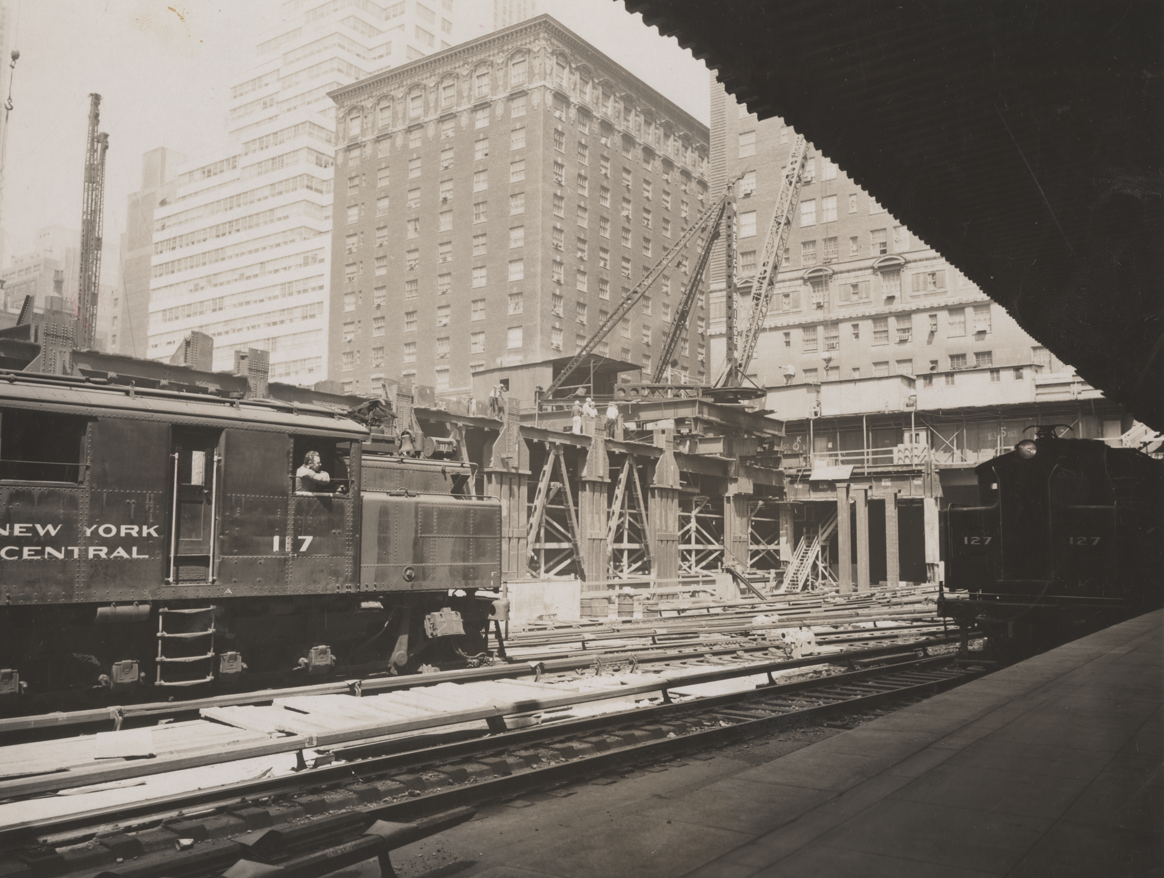
The vintage photograph shows the construction site of the future Union Carbide Building at 270 Park Avenue, looking north to 48th Street. The Marguery Apartments and Hotel have been demolished, and the upper-level tracks into the terminal are visible. As the adjacent structural model of the new building for JPMorgan Chase on the site makes clear, the skyscraper's great weight is deftly directed to long piers that fit between the tracks.
Completed in 1960, the 52-story Union Carbide building rose 707 feet – about half the height of the JPMC skyscraper – as a straight-up, rectangular slab of identical floors. Together with its lower 12-story annex on Madison, it contained 1.5 million sq. ft. of office space. At the time of its deconstruction, completed in 2021, Union Carbide was the tallest voluntarily demolished building in the world. In total, about 20 million cubic feet of debris (glass, steel, and concrete) was carted from the site; 97% of this material was recycled, reused, or upcycled. Through the purchase of transferable art rights allowed by the 2017 East Midtown Rezoning, the Foster + Partners tower encompasses 2.5 million sq. ft. within its 60 stories.
Presentation and structural models of Foster + Partners’ design for 270 Park Avenue, the global headquarters of JPMorgan Chase in New York, USA (2018-2025).
1,388 ft/ 423 m/ 60 floors
Architect: Foster + Partners
Structural Engineer: Severud Associates
Model on loan from Foster + Partners.