MIDTOWN
Midtown Manhattan – New York’s and America’s largest Central Business District – was both created by Grand Central Terminal and remains anchored by the train station and transportation hub. The city had crept northward up the island from the early 1800s, but lateral expansion converted to vertical concentration after Grand Central Terminal opened in 1913.
Modern Midtown is a complementary mix of uses – offices, retail, entertainment, clubs, hotels, and some residences. Its variety generates day and night activities, business and social. The flow of people in and out of the district from all parts of the city, and beyond, is fed by the trains and subways and their hundreds of thousands of commuters.
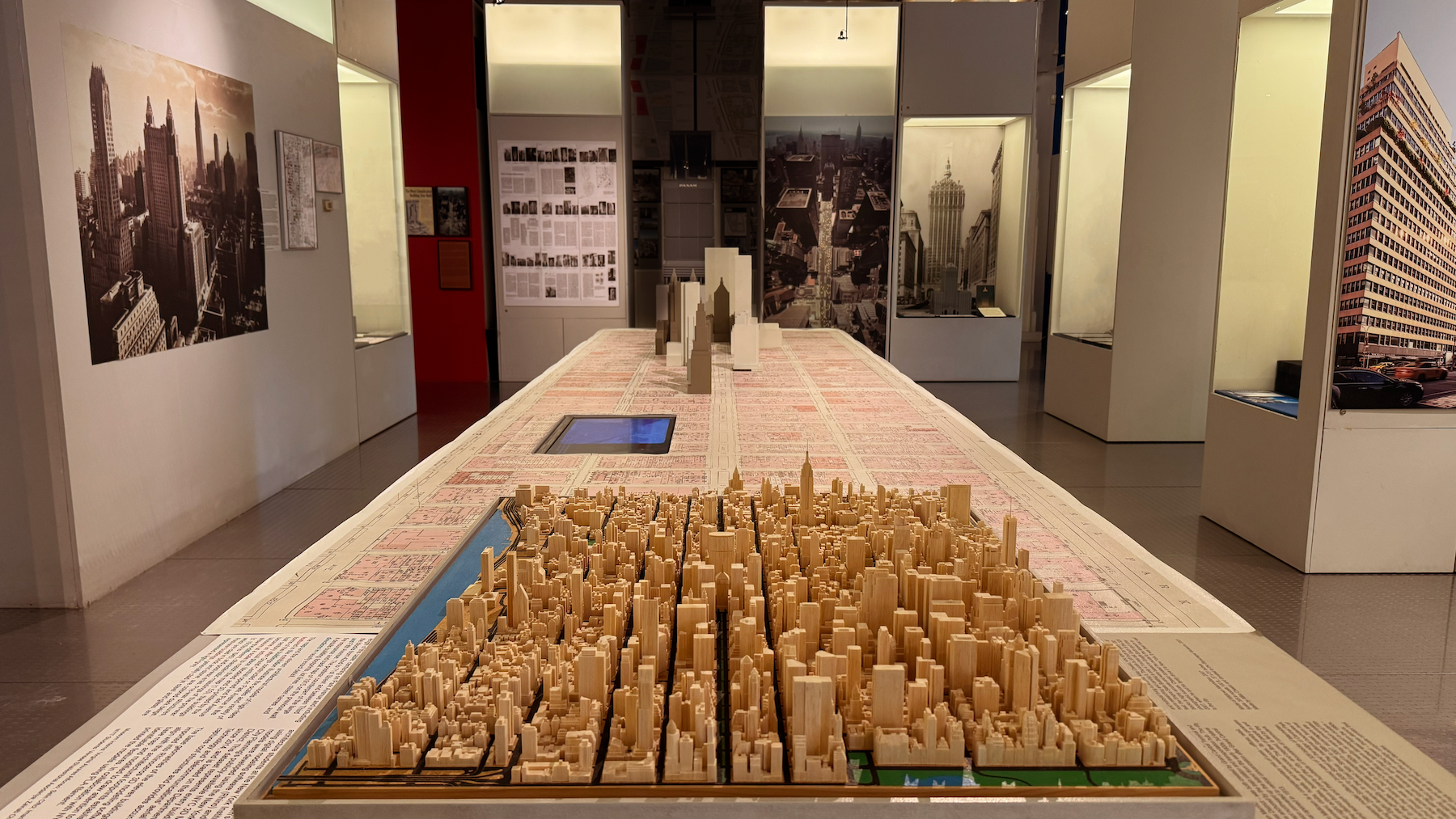
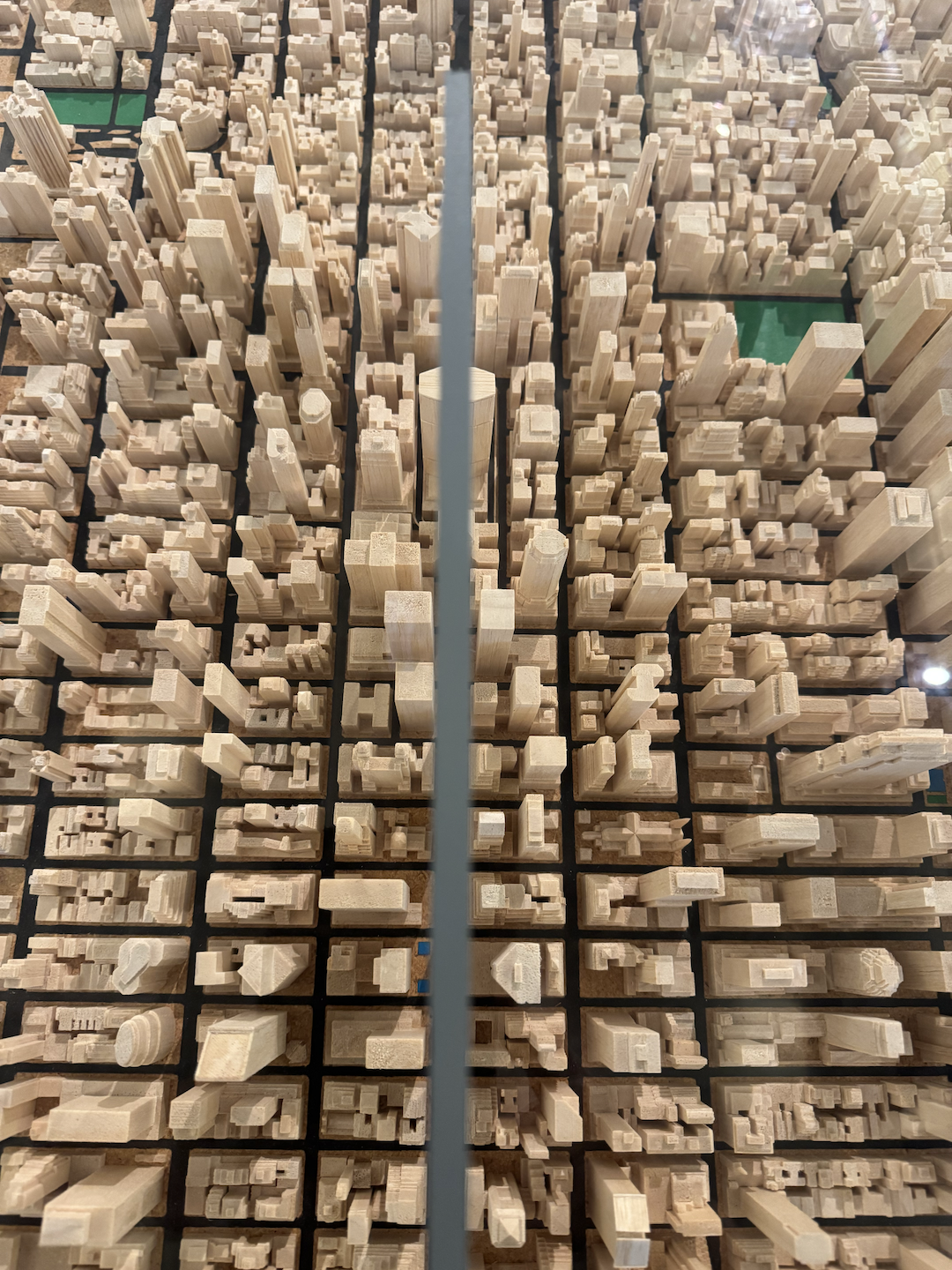
The miniature model offers a broad view of 328 blocks of Manhattan, stretching from 25th Street to 60th Street and the edge of Central Park and from Eighth Avenue to the East River. The traditional boundaries of Midtown are generally considered 34th Street to 59th Street, from river to river. In the model, which was completed in 2007, skyscrapers are spread across the island, but in the late 1920s, they were concentrated along 42nd Street near Grand Central and nearby on Madison and Fifth Avenue. And while new districts of office towers developed in clusters – in the 1960s along Sixth Avenue, and then farther west from the 1980s, as well as along Third Avenue north of 42nd Street – those districts exist in relation to and as a result of the prestige corporate corridor that was created on Park Avenue in the postwar decades.
This balsa wood miniature Midtown was created by a retired engineer and hobbyist living in Arizona, Mike Chesko, who spent thousands of hours researching and carving it. The scale is 3/8 inch for every 100 feet: the Empire State Building is only 4.7 inches tall. Each of the 328 blocks is highly accurate and was based on Google Earth and other photographic sources. Chesko donated the model to the Museum in 2007, when he and his family drove it to New York. It was their first visit to the city.
Museum Interns: Virginia Alvares Affonso; Selin Ciftci; Imari Monroe; Clara Moy. NYIT Students: Vensee Shaileshbhai Asodariya; Zainab Chaudhry; Baghdad Numi
PARK AVENUE MAP & MODELS
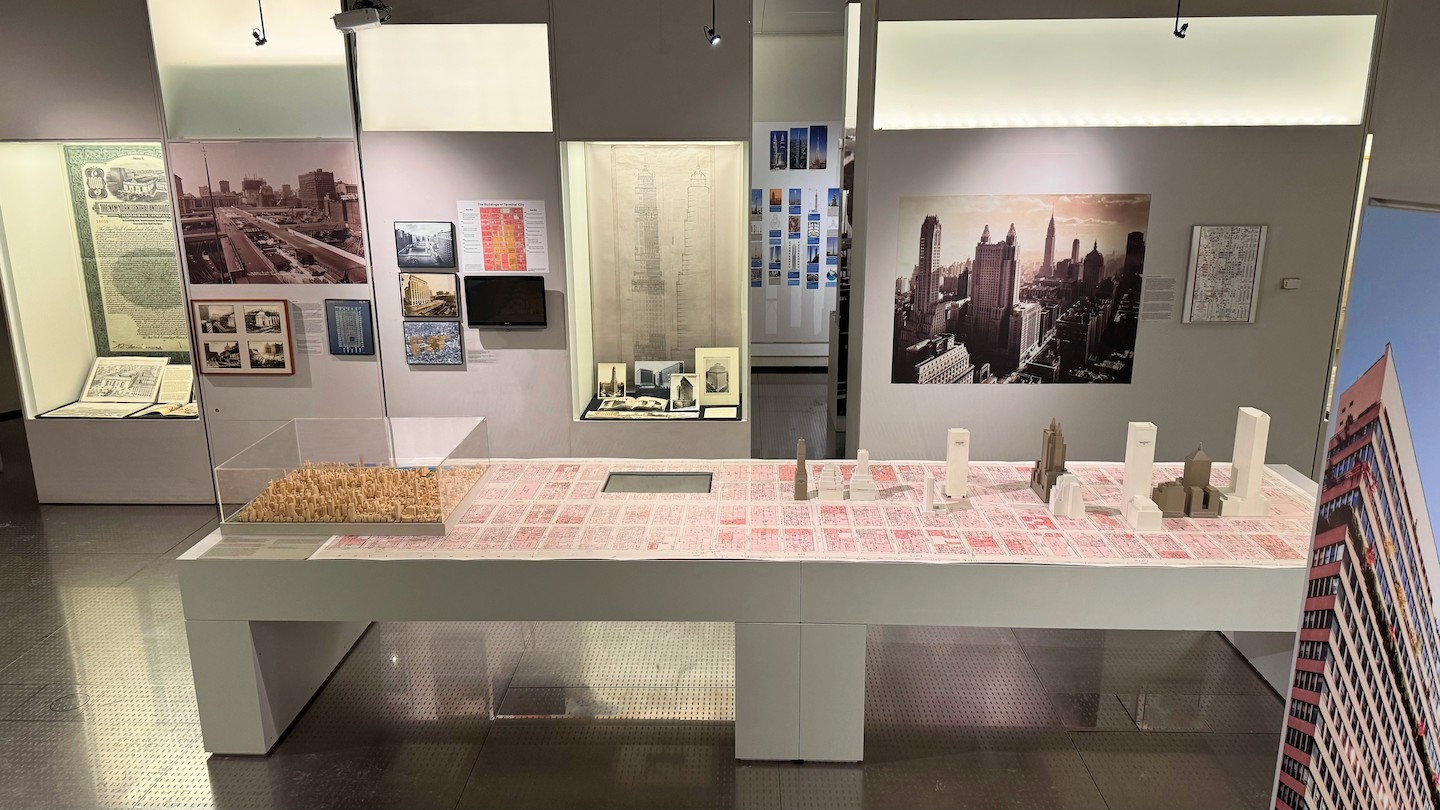
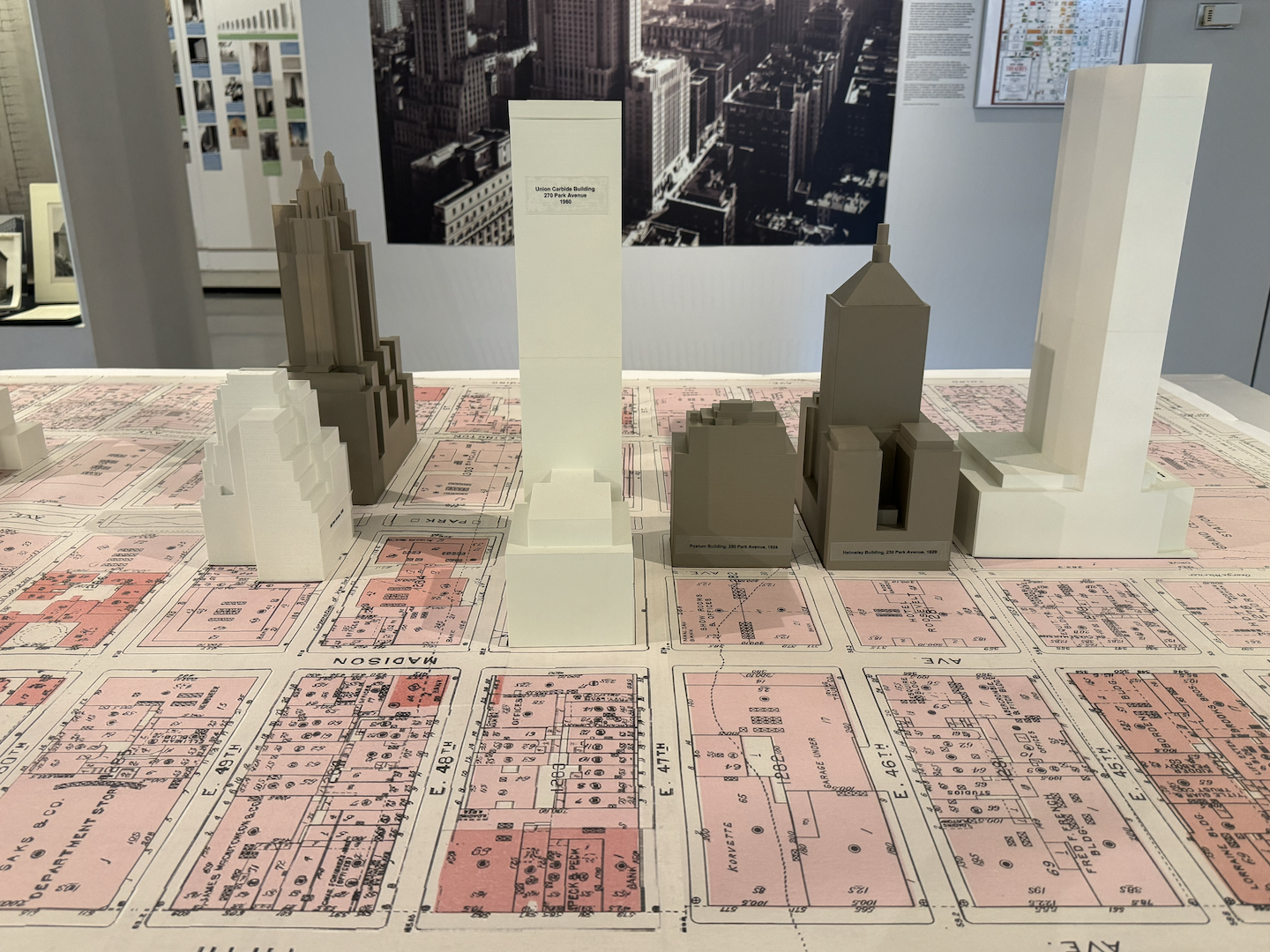
An enlarged 1970 G. W. Bromley land map stretches the length of this table, centering on Park Avenue and including the blocks from 42nd to 71st Street and between Third and Fifth Avenue. The postwar counterpart of the large fire insurance and track map of 1915 on the previous wall, it details building footprints, lot lines, street names, and directions in nearly exact detail.
The map and the eleven architectural models of high-rises featured in the exhibition illustrate the scales and variety of forms of the buildings constructed on Park Avenue in the half-century after Grand Central opened and Park Avenue became an actual place. Modeled and 3D-printed by the Museum at a scale to match the map (1:53), the buildings show the different, characteristic massings of the pre-war (c. 1910s to 1945) and post-war eras. Pre-war structures, which are clad in brick and stone, are colored dark beige. Post-war buildings, generally clad in steel and glass, are represented in light gray.
The models were created by the Museum’s interns and architecture students at the New York Institute of Technology using digital modeling software (Rhino) and 3D printing. The models were developed using the New York City Department of City Planning’s publicly-available NYC 3D Model by Community District. This dataset represents every building in the city since 2014, and is based on the Department of Information Technology and Telecommunications’ aerial survey, which captures roof structures and provides accurate building forms.
The base geometries of the eleven buildings modeled were imported into Rhinoceros 3D modeling software, scaled to align with the architectural footprints established in the project’s base map, and modified to draw attention to each building's identifiable features. In collaboration with NYIT, students 3D printed the models using PLA filament.